

If you’re a plumber looking to grow your business in the UK, getting more leads online is crucial. The Internet is a powerful tool to attract potential customers and keep your schedule full. Here are 10 actionable strategies to help you generate more leads online:
If you are a plumber or in any other trade, Developer Rocket can help create a stunning website that gets you more customers, get in touch today.

1. Improve Your Google Business Profile
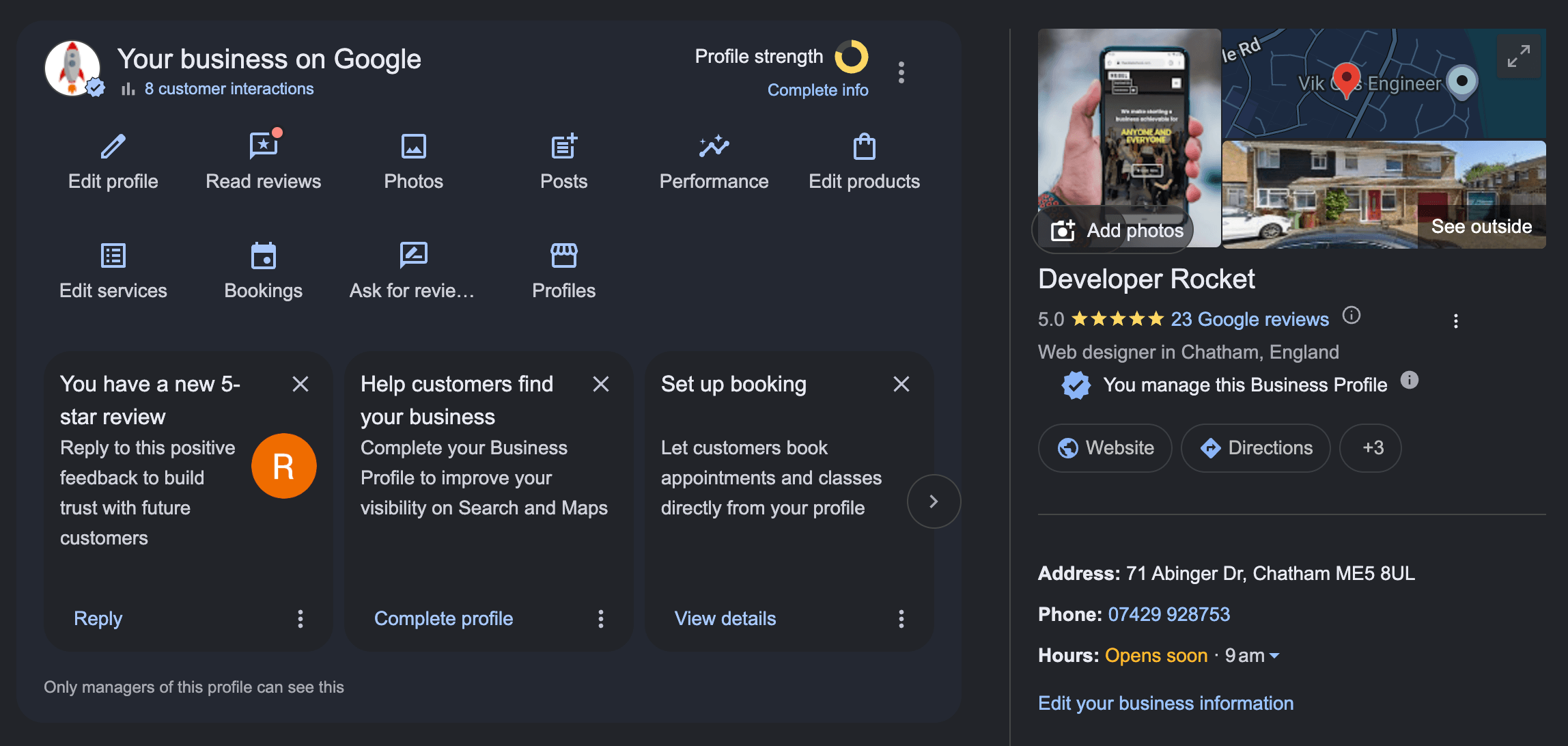
If you want to get more plumbing work locally, start with your Google Business Profile. This free listing helps customers find your business on Google Search and Google Maps when they search for services such as “plumber near me” or “emergency plumber in Rochester”.
A complete, accurate profile helps Google understand your business and gives potential customers the information they need to contact you. Google explains that local rankings depend mainly on relevance, distance and prominence, so completing your profile is a useful starting point rather than a guarantee of a top position.
Make Your Profile Clear and Accurate
Set up or claim your Google Business Profile and complete the verification process. Then check these details:
- Business name: Use your real business name as it appears on your website and branding. Avoid adding extra keywords or town names.
- Business category: Choose the category that best describes your main business, such as “Plumber”, and only add relevant additional categories.
- Service areas: List the towns and areas you actually cover. If you work from home and customers do not visit your premises, hide your address and display your service areas instead.
- Contact details: Add a working phone number and a link to your website.
- Opening hours: Keep your availability accurate, including bank holidays. Only advertise 24-hour availability if you genuinely provide it.
- Business description: Explain the plumbing work you undertake, the customers you help and what makes your business a good choice.
Show Customers Your Work
Upload genuine photographs of completed jobs, your team and your branded van. For example, a clear before-and-after photograph of a bathroom installation can help customers understand the standard of your work.
Ask customers for an honest review after completing a job, and reply professionally to feedback. Reviews help prospective customers assess your business, and Google confirms that review numbers and positive ratings can also support local rankings.
A practical first step: search for your business on Google today and check whether a new customer can quickly see what you do, where you work and how to get in touch.
Websites for plumbers
If you’re a plumber then having a professional website for your business is essential. A website that looks professional, loads fast, is mobile friendly and is search engine optimised is like having a massive billboard on a busy road. Include essential pages like services, testimonials, and a contact form. Make it easy for potential clients to find your phone number and get in touch.
Examples of good plumber webisites:
https://my-plumber.co.uk/
https://www.pimlicoplumbers.com/
https://plumber-template.webflow.io/
https://feexaro.webflow.io/
Create More Website Pages for Your Plumbing Services
Your website should make it easy for customers to find the exact service they need. A single page listing everything you do gives you limited space to explain each service or answer the questions customers have before booking.
Creating dedicated plumbing service pages allows you to provide more useful information and target relevant searches, such as “bathroom installation in Rochester” or “emergency plumbing repairs in Medway”.
Which Plumbing Service Pages Should You Create?
Start with the services you actually offer and want more enquiries for. Depending on your business, these could include:
- Emergency plumbing: Burst pipes, urgent leaks and other plumbing emergencies.
- General plumbing repairs: Dripping taps, leaking pipes and faulty toilets.
- Bathroom installation: Bathroom fitting, replacement suites and plumbing alterations.
- Drain unblocking: Blocked sinks, toilets and drainage services.
- Boiler installation and repairs: If you have the appropriate qualifications and registration for the work.
- Commercial plumbing: Plumbing repairs, installations and maintenance for business premises.
You do not need a separate page for every small task. Group closely related jobs together where one helpful page can cover them clearly.
What Should Each Service Page Include?
Think about what a customer needs to know before contacting a plumber. Each page should explain:
- What the service covers: Describe the problems you solve and the work you undertake.
- Where you work: Mention your genuine service area naturally.
- What happens next: Explain how customers request a quote, arrange a visit or book an emergency call-out.
- How pricing works: Include a starting price where practical, or explain what affects the quote and whether call-out charges apply.
- Why customers should trust you: Show relevant reviews, genuine job photographs and appropriate qualifications.
- How to contact you: Include a clear phone number and a short enquiry form.
For example, a bathroom installation page could explain whether you handle the full refurbishment or just the plumbing, show photographs of completed bathrooms and answer questions about timescales.
Make Each Page Useful and Distinct
Avoid copying the same text across every service page and changing a few words. Someone with a burst pipe needs different information from someone planning a new bathroom.
Use a descriptive heading, such as “Bathroom Installation in Rochester and Medway”, where it accurately reflects your service area. Link to each page from your main services menu so visitors can find it easily.
A well-planned plumbing website should help customers understand your services and take the next step. Focus on answering their questions clearly, then make requesting help straightforward.
Emergency Plumbing Leads
A great way to get leads as an emergency plumber is to do the following steps
- Create a simple and easy to use website that users can easily get in contact with you
- Make sure the website has testimonials to increase trust
- Make sure the website clearly has a phone number or contact form
- Ensure the site is mobile friendly, it’s likely most of your leads will come from a mobile device
- Track leads, if you can understand where your leads are coming from you can get more!
If you need help with this, get in touch with us in the form above.
Adding prices to your plumber’s website
Often when a customer finds you online they’ll simply be looking for a price and a way to get in touch. If they see a price and it’s in their budget, they’ll likely get in touch. Be transparent with your customers, add a “starting from” price, making it clear to customers that you won’t overcharge them. If you are looking for pricing on a website have a look at our pricing page here.

Use Local SEO to Attract Nearby Plumbing Customers
SEO for plumbers helps your website appear in unpaid search results when people look for the services you offer. The aim is to attract relevant local visitors who could become paying customers.
For example, someone searching for “emergency plumber in Rochester” has a different need from someone searching for “how to fix a dripping tap”. Both searches relate to plumbing, but the first is more directly connected to booking a job.
Start by focusing on the services and locations that matter most to your business.
Find the Keywords Your Customers Use
Keyword research helps you understand how customers search for plumbing services. Start with the jobs you want more of, then consider the words people use to describe them.
Examples include:
- Emergency work: “emergency plumber Rochester” or “burst pipe repair Medway”.
- General repairs: “toilet repair Chatham” or “leaking tap repair”.
- Installation work: “bathroom installation Rochester” or “radiator installation Medway”.
- Commercial work: “commercial plumber Kent” or “commercial plumbing maintenance”.
These are starting points to investigate, rather than confirmed high-volume keywords. Tools such as Google Keyword Planner can help you explore demand, while Google Search Console shows which searches already bring visibility and clicks to your website.
Choose keywords based on relevance as well as search volume. A specific local search with fewer searches may be more useful to your business than a broad national term.

Match Each Search to a Relevant Page
Once you have identified useful keywords, match them to the most appropriate pages on your website.
For example, a bathroom installation page should explain your bathroom fitting service, show completed projects and answer questions about the process. An emergency plumbing page should make your coverage, availability and contact details easy to find.
Use descriptive page titles and headings, and include your service area naturally in the content. Avoid repeatedly adding the same phrase to every paragraph. Google recommends using the words people search for in prominent places, including page titles, main headings and descriptive links.
Add Useful Information About the Areas You Serve
Help customers understand whether you cover their location. Mention the towns you genuinely work in and include relevant examples of completed jobs where possible.
If you create individual location pages, give each one useful, distinct content. This could include local projects, customer feedback and practical information about your service in that area. Avoid publishing identical pages with only the town name changed.
Your Google Business Profile supports this local presence too. However, local SEO cannot guarantee a top position: Google’s local results depend on relevance, distance and prominence.
Understand What Keyword Research Figures Mean
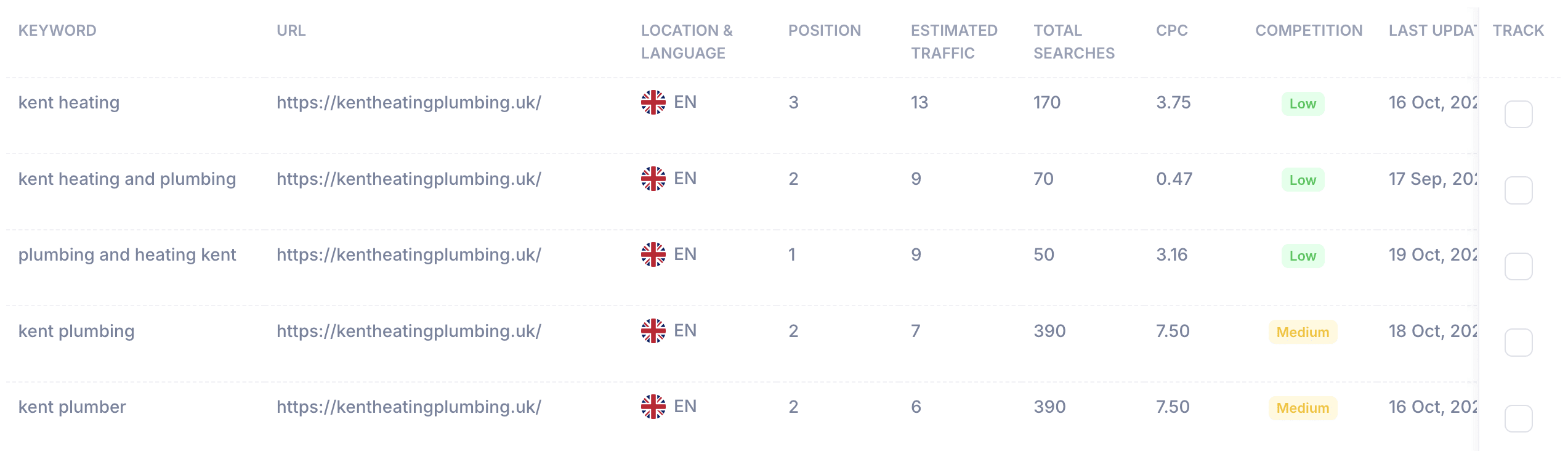
The keyword research screenshot below is a historical example of the data available when planning a plumbing marketing campaign. Search volumes and advertising costs change, so check current figures and the selected location before using them to make decisions.
Paid advertising competition is different from organic SEO competition. In Google Keyword Planner, “low competition” refers to competition between advertisers. It does not mean that few websites target the phrase or that ranking organically will be easy. Advertising bid estimates also do not guarantee what you will pay for a click.
Measure Enquiries Alongside Rankings
Use Google Search Console to monitor which searches generate impressions and clicks, then track the calls and enquiries your website produces.
Look for opportunities to improve relevant pages that already receive visibility. If your bathroom installation page attracts visitors but few enquiries, check whether it answers customers’ questions and makes contacting you straightforward.
The goal is to generate more suitable plumbing work—not simply increase visitor numbers.
Pay-Per-Click (PPC) Advertising for Plumbers
Platforms like Google Ads allow you to target customers searching for plumbing services in your area. Bid on relevant keywords, such as “emergency plumber” or “boiler repairs,” to appear at the top of search results. Set a clear budget to manage costs effectively.

PPC For Plumbers
Pay-Per-Click (PPC) advertising—especially on platforms like Google Ads—is one of the fastest ways for plumbers in the UK to generate high-quality leads. With the right setup, your ad can appear right at the top of Google when someone types in “emergency plumber near me” or “boiler installation in [your town]”.
Here’s how to make PPC work for your plumbing business:
1. Target the Right Keywords
Start with highly targeted keywords that reflect buyer intent. Focus on search terms like:
“Emergency plumber [your town]”
“Gas safe registered plumber near me”
“Blocked drain plumber UK”
Use keyword match types like exact match and phrase match to avoid wasting your budget on irrelevant clicks.
2. Use Geo-Targeting
As a local plumber, you don’t want your ads showing to people outside your service area. Use location targeting to restrict your ads to postcodes or cities where you actually operate. You can even set different bids for high-value areas.
3. Write Compelling Ad Copy
Your ad needs to stand out. Include your USP (e.g. “24/7 Call-Outs”, “No Call-Out Fee”, “Gas Safe Registered”), and use calls to action like “Call Now”, “Book Today” or “Get a Free Quote”. You can also use ad extensions to add phone numbers, site links (like your ‘Reviews’ or ‘Contact’ pages), and locations.
4. Set Up a Landing Page That Converts
Don’t just send people to your homepage. Create a landing page tailored to each ad group. If you’re advertising boiler repairs, for example, your landing page should focus only on that service, include reviews, clear pricing, and a strong call-to-action (e.g. “Call for Same-Day Repair”).
5. Track Every Lead
Install conversion tracking so you know what’s working. Google Ads allows you to track phone calls, form submissions, and even WhatsApp clicks. This data will help you fine-tune your campaigns and improve ROI.
6. Start Small and Optimise
You don’t need a huge budget to get started. Even £5–£10 a day can generate leads if your campaign is well-targeted. Monitor your cost-per-click (CPC), click-through rate (CTR), and cost-per-conversion weekly and adjust your bids and keywords as needed.
Emergency Plumbing Leads: How to Capture Them
Emergency plumbing jobs are high-value leads—people need help immediately and are willing to pay a premium.
How to attract emergency plumbing leads:
- Run PPC ads targeting “burst pipe repair” or “24/7 plumber”
- Optimize your website for same-day service messaging
- Offer a click-to-call button for instant contact
1. Targeting Local Customers
Since plumbing services are often location-specific, plumbers can use PPC to target people in their local area who are searching for plumbing services. For example, if someone searches for “plumber near me” or “emergency plumber in Maidstone,” plumbers can create ads that target those specific search queries.
Google Ads allows plumbers to bid on keywords related to plumbing services and set their ads to appear only when people in their service area search for those keywords. By doing so, plumbers can reach customers who are actively looking for their services in their local area.
2. Ad Formats and Platforms
PPC ads can appear in a variety of formats, on different platforms, and at different stages of the customer journey:
- Google Ads: Ads can appear on the Google Search Network when users search for relevant plumbing terms or services (e.g., “plumbing repair,” “pipe leak fix,” “drain cleaning”).
- Google Display Network: Plumbers can use image or text ads on websites related to home improvement or plumbing content, reaching users who may not have searched for plumbing services but are still interested in-home services.
- Local Services Ads: Google offers a specialized ad format for service-based businesses like plumbing, called Local Services Ads (LSAs). These ads appear at the top of search results and allow customers to directly book a plumber’s services. LSAs also include ratings and reviews, making it easier for potential customers to trust the service.
Plumber PPC
There’s lots more info about PPC advertising that you find online, but if you want to start getting leads for your plumbing business today, get in touch with us.
Leverage Social Media
Use platforms like Facebook and Instagram to showcase your work, share customer testimonials, and engage with your audience. Post helpful plumbing tips or share before-and-after photos of jobs you’ve completed to build trust and attract followers. If done consistently social media can massively change your business, but if it’s not for you, then don’t waste your time. You can spend your resources (money and time) on other areas like PPC and SEO if you want more direct and fast results.
Turn Completed Jobs into Reviews and Referrals
Every completed plumbing job is an opportunity to build trust and attract new customers. Reviews help people assess your business, while recommendations from previous customers can introduce you to others who need a plumber.
Make this part of your usual follow-up process:
- Ask for an honest review: Send customers a direct link to your Google review page after completing their job. Keep the request friendly and avoid offering rewards for reviews.
- Encourage recommendations: Let customers know you welcome referrals to friends, family or colleagues who need plumbing work.
- Make your details easy to share: Include your business name, phone number and website in your follow-up message.
- Respond to feedback: Thank customers for their reviews and handle concerns professionally.
A simple message could say: “Thanks for choosing us for your plumbing work. If you have a moment, we’d appreciate an honest Google review: [review link]. Please feel free to pass our details on to anyone who needs a plumber.”

Offer Free Estimates or Discounts
Promote offers like free estimates or a discount for first-time customers on your website and social media. These incentives encourage potential clients to choose your services over others. If you have a form on your website that asks users to fill in their details for a free quote then you’ll be sure to get customer enquires when they land on your site. This then allows you to get in touch and even start a marketing email list.
Create Valuable Content
Start a blog or YouTube channel to share helpful tips, such as “How to Fix a Leaky Tap” or “Top 5 Signs You Need a Boiler Replacement.” Providing useful information establishes you as an expert and helps attract potential customers searching for solutions. Creating this kind of content has several benefits, it creates trust in your viewers of the site and business, and if you are providing valuable content users will assume you know what you are talking about. Blog posts are also a great way to generate organic traffic from search engines when people are searching for solutions to their problems.
Partner with Local Businesses
Collaborate with other local businesses, such as hardware stores or property management companies, to get referrals. Offer to feature their services on your website in exchange for referrals to your plumbing business.
Use Online Directories
List your business on popular online directories like Checkatrade, Rated People, and MyBuilder. Ensure your profiles are complete, accurate, and regularly updated to improve visibility and attract more leads.
Are you looking for plumber leads?
Getting leads as a plumber is the lifeline at everyone in the business needs. If youre not getting a steady stream in then your business cannot run. We can help you get a flow of traffic to your website which will turn into leads weather you are first starting or if you are an established plumber looking to up your leads. When we work with plumbers we ask then the following questions:
Business Information & Goals
What areas do you serve, and do you want to expand into new locations?
What plumbing services do you specialise in (e.g., emergency plumbing, boiler installation, drain unblocking, bathroom renovations)?
Who is your ideal customer (residential, commercial, property managers, landlords, etc.)?
What are your current business goals in terms of lead generation and revenue growth?
Current Online Presence & Marketing Efforts
Do you currently have a website? If so, when was it last updated?
How do customers currently find you (Google search, word of mouth, social media, ads, directories, etc.)?
Do you have a Google Business Profile, and is it optimized with reviews, images, and regular updates?
Are you running any paid ads (Google Ads, Facebook Ads, Local Services Ads)?
Do you use social media for your business (Facebook, Instagram, LinkedIn, TikTok)? How active are you?
Do you have any existing customer email lists, and do you use email marketing?
SEO & Lead Generation
Are you currently ranking for plumbing-related keywords in your service area?
Do you have a strategy for collecting and displaying customer reviews?
Have you invested in content marketing, such as blog posts, FAQs, or case studies?
Do you track website traffic and conversions using tools like Google Analytics?
How do you currently follow up with leads, and do you have a system in place (CRM, automated responses)?
Conversion & Customer Experience
How easy is it for customers to contact you (online booking, click-to-call, live chat, WhatsApp)?
What are the most common questions customers ask before booking?
Do you offer promotions or discounts to attract new customers?
What is your response time for inquiries, and do you think it impacts your ability to convert leads?
What’s your biggest challenge when it comes to getting more customers?
Competitive Positioning
Who are your biggest competitors, and what do they do well online?
What makes your plumbing business different from others in your area?
Do you have any testimonials or before/after photos of your work that could be showcased?
Have you considered offering guarantees or warranties to increase customer trust?
If you could change one thing about your online presence today, what would it be?
All of these questions are relavent when it comes to getting your more customers and lead generation for your plumbing business
Getting more business for Plumbers online
The key to generating more leads online as a plumber in the UK is to stay consistent and provide excellent service. By implementing these strategies, you can expand your reach, attract more customers, and grow your business effectively. Don’t wait—start applying these tips today and watch your leads grow! Developer Rocket is here for you when it comes to making a brand-new website, improving your SEO, PPC advertising and creating valuable content.