

Starting a competition or raffle business in the UK can be an exciting way to build income, engage audiences, and create buzz online. Unlike many e-commerce ideas, this niche has unique legal and marketing challenges, so doing it right from the start is essential.
If you are looking to start your own competition website, read more about how we do things here.
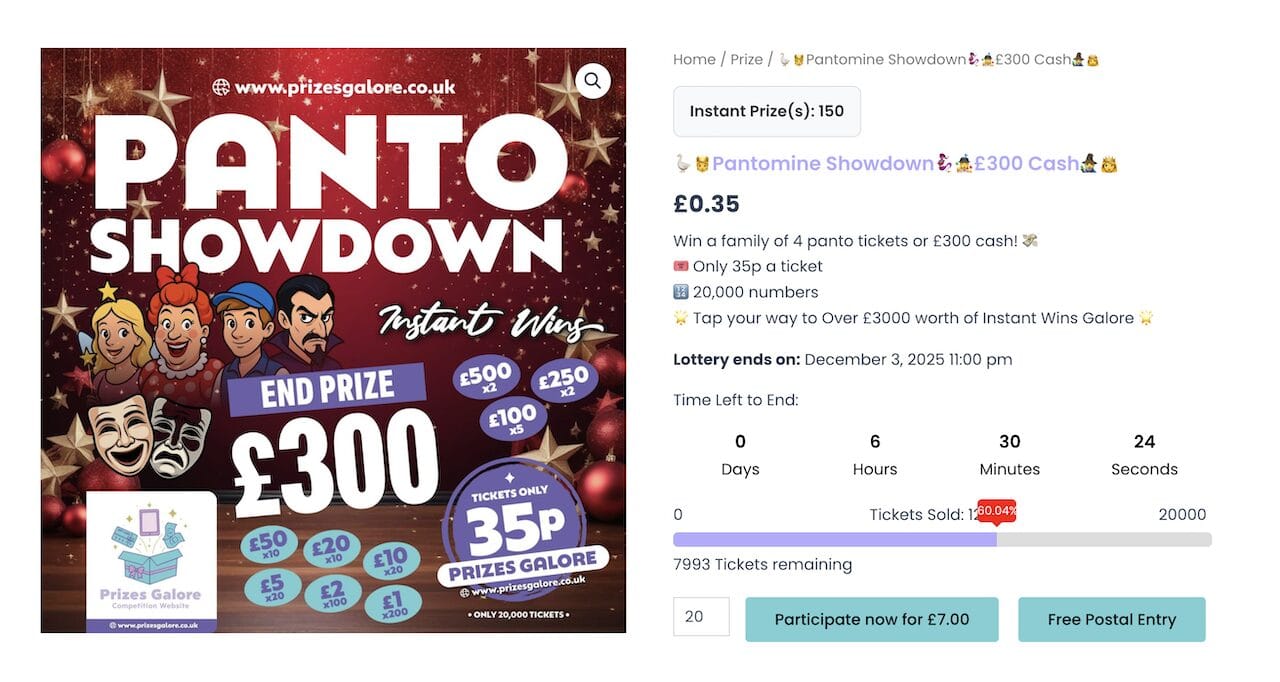
1. Understand What a Competition Business Really Is
A competition or raffle business allows people to enter a draw for the chance to win a prize. This is usually done online, where users enter by purchasing a ticket, answering a question, or using a free entry route.
Common formats include:
Raffles – paid entry, winner chosen at random
Prize draws – similar to raffles, often used for promotions
Skill-based competitions – entrants must answer a question or complete a task
Free draws – no payment required to enter
The key difference between these formats isn’t the name — it’s how entry works, which determines whether gambling law applies.
Choosing the Right Competition Format (Very Important)
Choosing the correct format is one of the most important decisions you’ll make.
Raffles and Lotteries
If people pay to enter and the winner is chosen purely at random, the competition is classed as a lottery under UK law. Most commercial lotteries require licensing and are tightly regulated.
Prize Competitions
Prize competitions can fall outside gambling law if they include:
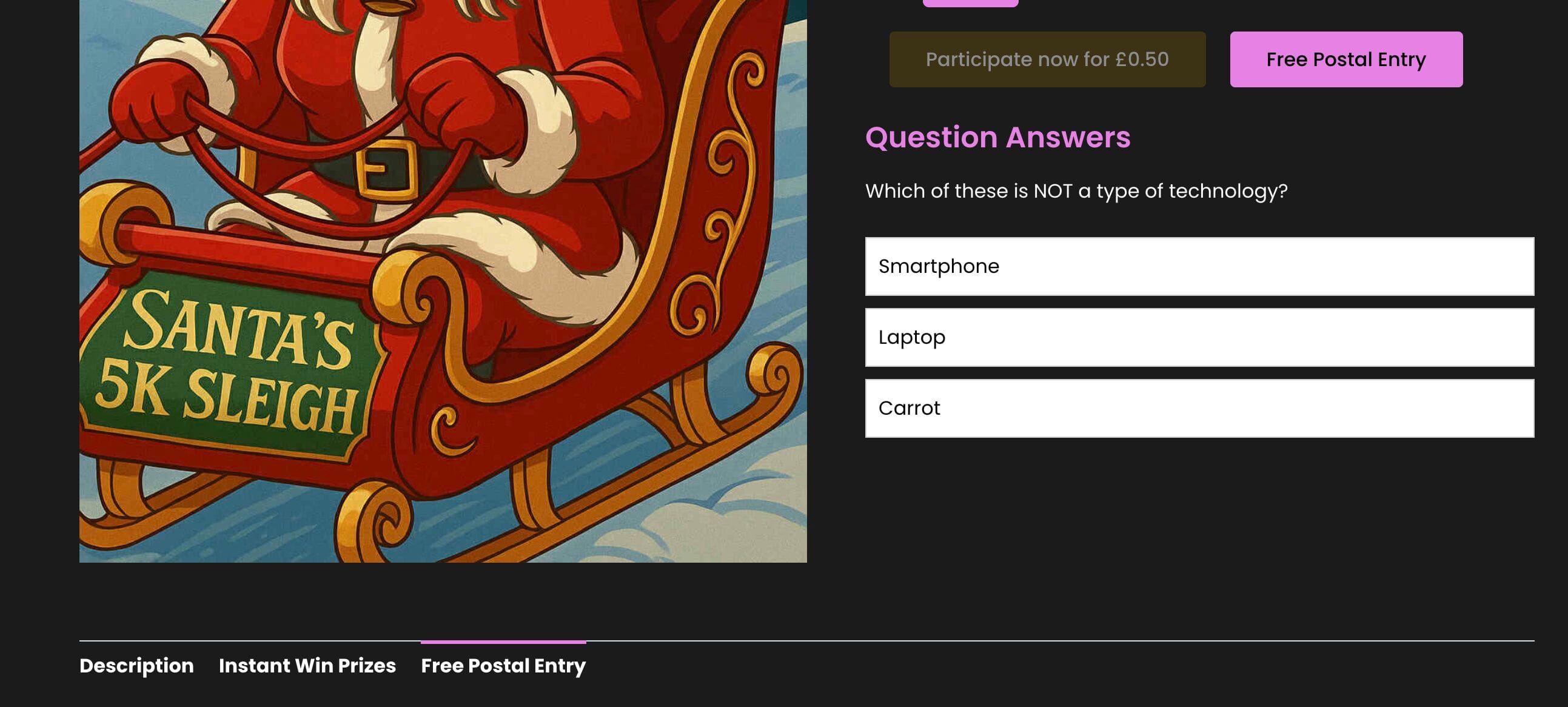
A genuine skill-based question, or
A free entry route that is clearly advertised and genuinely free
The skill element must be meaningful — it should reasonably prevent a significant proportion of people from entering or winning without effort.
Free Entry Route
A free entry route can help avoid lottery classification, but it must:
Be clearly visible (not hidden in small print)
Not be more difficult than the paid entry
Have equal chances of winning
Getting this wrong is one of the most common reasons competition sites run into legal trouble.
2. Know the Legal Framework in the UK
Competition and raffle businesses sit at the crossroads of promotional marketing and gambling law in the UK. The key rule? If people pay to enter and winners are chosen by chance, it’s treated as a lottery, and strict rules apply.
Key Legal Considerations
Gambling Act 2005 applies to most raffles/lotteries. Sprintlaw UK
Prize competitions with a skill element (where entrants must solve a problem or demonstrate knowledge) can avoid some gambling regulations. Gambling Commission
Free entry routes may help you stay outside lottery law — but must be genuinely free and clearly promoted. ASA
Advertising must follow the UK CAP Code for promotional marketing. ASA
If you’re charging for entry without a genuine free entry route or skill test, you may need a Gambling Commission licence. Gambling Commission
Legal Requirements for Competition and Raffle Businesses in the UK
Competition businesses in the UK are primarily governed by the Gambling Act 2005, along with advertising and consumer protection regulations.
Key Legal Points to Understand
Paid entry + random draw = likely a lottery
Skill-based competitions can avoid gambling law if done properly
Free draws do not require a licence
Advertising must be fair, transparent, and not misleading
Terms and conditions must be clear and accessible
Depending on your format, you may need:
A Gambling Commission licence
Local authority registration
Legal advice before launch
If in doubt, always get professional legal guidance before accepting payments.
Tip: Always get legal advice before launching — the difference between a legal competition and an illegal lottery can be small but costly.

Registering and Structuring Your Business
Before launching your website, you should properly set up your business.
Common Business Structures
Limited Company (Ltd) – most professional and scalable option
Sole Trader – simpler, but offers no personal liability protection
You’ll also need:
A business bank account
Clear terms & conditions
Privacy and cookie policies
GDPR-compliant data handling
Appropriate insurance (public liability, cyber liability if applicable)
Running competitions without proper business setup can cause problems with payment providers and regulators.
Trust and Transparency: How to Get People to Enter
People won’t enter competitions they don’t trust. Transparency is essential.
Ways to Build Trust
Display previous winners (with permission)
Show real photos or videos of prize handovers
Clearly state draw dates and times
Explain how winners are chosen
Run live or recorded draws
Include clear contact details and an About page
Trust is often the difference between a competition that sells out and one that fails.
Common Mistakes to Avoid
Many competition businesses fail due to avoidable errors.
Common Pitfalls
Running an illegal lottery without realising
Hiding the free entry route
Weak or confusing terms and conditions
Poor website performance
No clear draw process
Underestimating how hard marketing is
Offering unappealing prizes
Avoiding these mistakes can save you time, money, and legal trouble.
3. Clarify Your Goals and Market
Before you write your first business plan, ask yourself:
Why are you starting this business?
Passive income? Community engagement? A creative project?Who is your audience?
Specific niches (e.g., collectors, gamers, fitness gear fans) convert better than generic “win cash” contests.
Competition businesses that succeed tend to have a clear niche and purpose, not just a vague desire to “make money”.
4. Plan Your Business Setup
Even before you build a website, you need the right foundations:
Business Structure
Most UK competition startups choose one of these:
Sole Trader — simple, but no personal asset protection.
Limited Company (Ltd) — offers liability protection and appears more credible to customers and service providers.
Registering with Companies House and setting up a business bank account is essential if you’re serious about growth — especially in this regulated niche. Design Hero
Company Name & Branding
Be careful with terms that imply gambling on legal documents, as these can complicate payment provider approvals and licensing.
5. Budgeting and Planning Costs
Competition businesses can start with relatively low overhead compared to traditional retail — but they still require careful budgeting:
Website design and development
Legal fees and regulatory compliance
Marketing and advertising
Prize procurement and fulfilment
Payment processing fees
Most early failures in this industry come from underestimating ongoing costs like marketing and customer support.
6. Build a Professional Website
Your website is your storefront and admin centre combined.
A robust platform should:
Accept secure payments
Display clear competition rules and terms
Automate ticket issuance and tracking
Randomise draws transparently
Integrate marketing and analytics tools
Avoid running paid competitions solely on social platforms — many will restrict or shut down accounts selling prizes without proper infrastructure.
Essential Website Features for a Competition or Raffle Site
Your website is the heart of your competition business. It must be functional, secure, and trustworthy.
Must-Have Features
Secure payment processing
Ticket or entry tracking system
Clear competition pages with:
Prize details
Entry cost
Draw date
Odds or ticket limits
Automated entry confirmation emails
Terms and conditions for each competition
User accounts or order history
Winner announcements and draw results
A poorly built site will struggle to convert visitors — even with great prizes.
7. Create Effective Marketing
Successful competition and raffle businesses don’t sell tickets — they sell engagement.
Prioritise:
Social media strategies
Email marketing
Paid ads (e.g., Facebook, Instagram)
Collaborations with influencers or affiliates
Build a consistent brand tone and make sure your promotional messages are compliant with UK advertising standards.
8. Stay Legal and Transparent
Compliance isn’t a one-off task — it’s ongoing:
Clearly state competition terms and age restrictions. GOV.UK
Include a free entry route or skill element if required. ASA
Follow data protection and marketing laws (e.g., GDPR).
Keep records of draws and prize fulfilment.
Running a competition that accidentally crosses into illegal lottery territory can lead to fines or even criminal charges, so compliance pays off. Find out more on this matter with Sprintlaw UK.

9. Launch and Scale
Once you’re compliant, branded, and marketed:
Soft launch with a small audience.
Collect feedback and optimise.
Scale with bigger prizes and broader promotions.
Long-term success requires commitment — competition businesses rarely go viral overnight.
Frequently Asked Questions for Competition Sites
Is a competition business legal in the UK?
Yes, but only if it complies with UK gambling and advertising laws.
Do I need a Gambling Commission licence?
Possibly — it depends on whether your competition is classed as a lottery.
Do I need a free entry route?
If your competition relies on chance and paid entry, a free entry route is often essential.
Can I run competitions on social media?
Yes, but you should always link back to your website and follow platform rules.
Final Thoughts – How to start your own raffle website
Starting a competition or raffle business in the UK can be rewarding, but it’s not as simple as “set up a site and sell tickets”. The key is to combine clear goals, legal compliance, professional branding, and smart marketing to build trust and drive sales. Get in touch with us today to start your own competition website.