
Running an online competition website in the UK can be extremely profitable — but it also comes with strict legal responsibilities. One of the most common (and costly) mistakes competition website owners make is misunderstanding RMG licences.

So, what exactly is an RMG licence, and do competition websites actually need one?
In this guide, we’ll break it down clearly — without legal jargon — so you can understand:
What an RMG licence is
Who needs one
When competitions cross into gambling
What happens if you get this wrong
How to stay compliant without killing conversions
Running a competition website already?
A small change in how your competition works can make a big legal difference.
Speak to us before payment providers do

What Does RMG Stand For? For Competition websites
RMG stands for Remote Gambling.
An RMG licence (Remote Gambling Licence) is issued by the UK Gambling Commission and is required for businesses that offer gambling activities online to UK customers.
This includes:
Lotteries
Prize draws
Games of chance
Betting
Casino-style games
If money is paid and the outcome is determined by chance, you are entering regulated territory.
Why Competition Websites Fall Into a Grey Area
Many competition website owners assume:
“I’m not running a casino, so I don’t need a gambling licence.”
Unfortunately, that assumption is where problems start.
Competition websites often sit in a legal grey area between:
Skill-based competitions (generally allowed without a licence)
Games of chance (which require an RMG licence)
The difference is not what you call the competition — it’s how it actually works.
When Does a Competition Require an RMG Licence?
A competition website may require an RMG licence if all of the following apply:
1. Entry Requires Payment
If users must pay to enter (directly or indirectly), this is the first red flag.
2. Winning Is Based on Chance
If the outcome is random (e.g. random number generators, ticket draws, instant wins), it’s classed as chance.
3. No Genuine Skill Element
If the “question” is extremely easy (or irrelevant), the Gambling Commission may consider it not a genuine test of skill.
Example of non-genuine skill:
“What colour is the sky?”
“2 + 2 = ?”
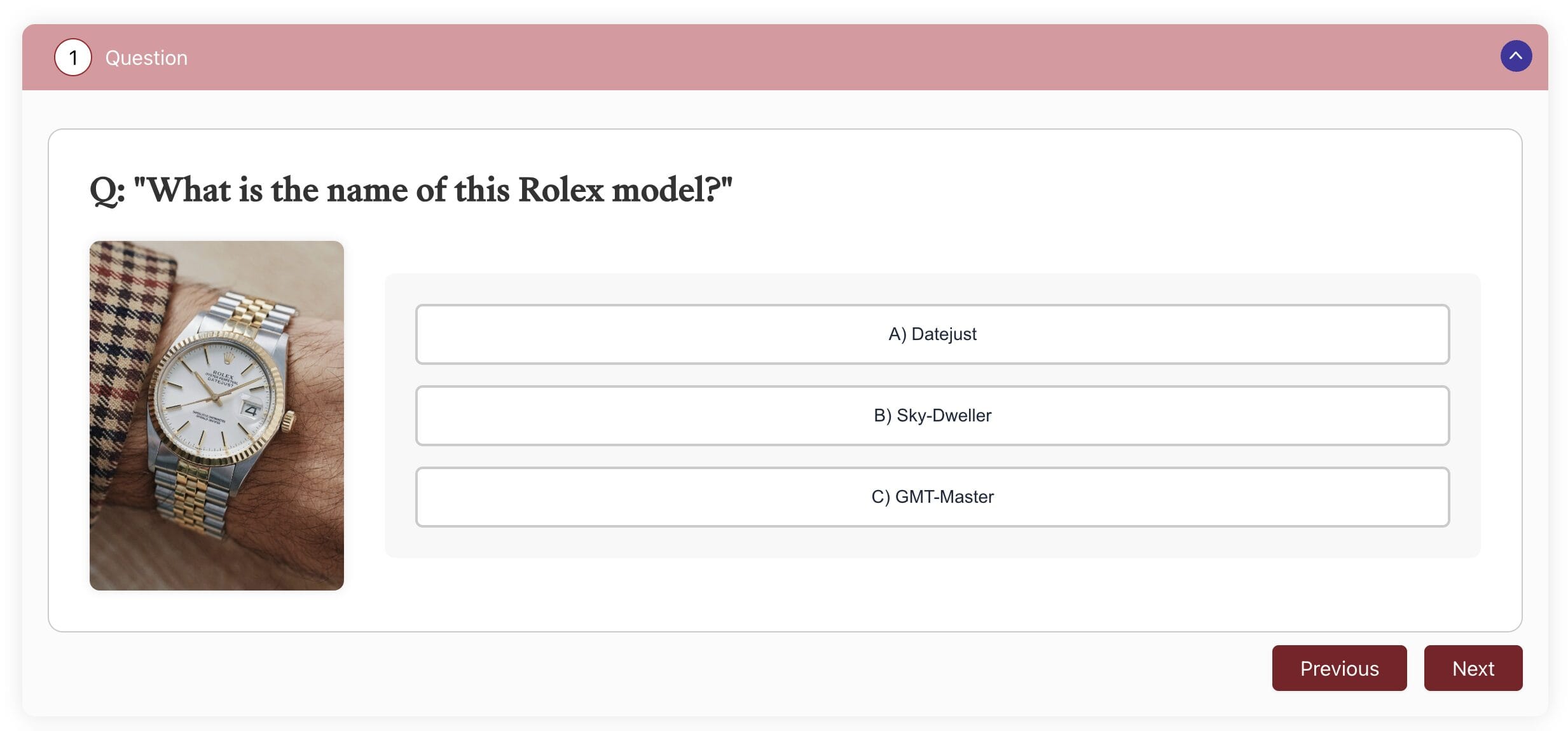
These are often rejected as valid skill-based competitions. Below is a real example of a skill based question from the Vintage Watch Draw. It. takes genuine skill to answer this question.
Skill-Based Competitions vs Gambling (Critical Difference)
There is a key difference between Skill-Based Competitions and Gambling, gettting this right will make your competition website legal or not-legal.
Skill-Based Competitions (Usually No Licence Required)
Requires real effort, knowledge, or judgement
A significant proportion of people could reasonably get it wrong
The skill element must determine the outcome
Examples:
Complex quiz questions
Puzzles requiring reasoning
Timed challenges with scoring
Games of Chance (RMG Licence Required)
Winner chosen randomly
Ticket numbers drawn
Instant win reveals
Spin wheels / scratch cards (without skill)
If chance plays any meaningful role, licensing becomes an issue.
What About Free Entry Routes?
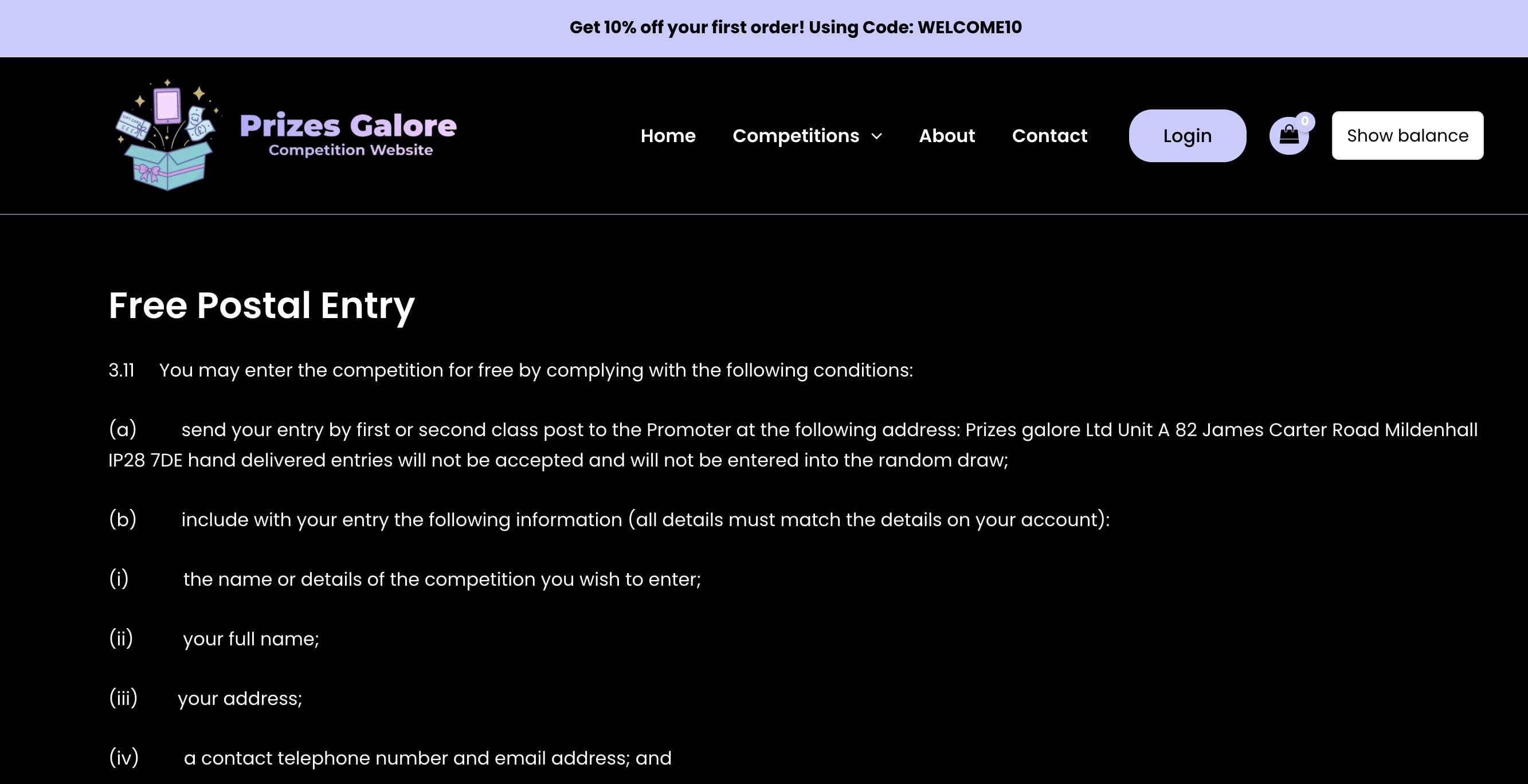
Some competition websites rely on a free postal or online entry route to avoid needing a licence.
While this can help, it must be:
Genuinely free
Clearly displayed
Equal in chance to paid entries
Not hidden behind friction
If your free entry is buried in terms, delayed, or discouraged — it may not protect you.
What Happens If You Get This Wrong?
Failing to comply can lead to:
Payment Gateway Shutdowns
Most providers (Stripe, PayPal, Checkout.com) will:
Freeze funds
Terminate accounts
Blacklist businesses
Hosting & Domain Issues
Some hosts will suspend sites involved in unlicensed gambling.
Legal Enforcement
The UK Gambling Commission has the power to:
Issue fines
Force site shutdowns
Take legal action
Long-Term Brand Damage
Once flagged as “high-risk”, it becomes extremely hard to:
Get payment processors
Open new merchant accounts
Scale advertising
Do All Competition Websites Need an RMG Licence?
No — but many accidentally qualify for one.
You may not need an RMG licence if:
Your competition is genuinely skill-based
Free entry is properly implemented
Chance plays no role in determining winners
However, the burden of proof is on you, not the regulator.
Can You Run a Competition Website Without an RMG Licence?
Yes — but it must be designed correctly from day one.
This includes:
Proper competition mechanics
Carefully written questions
Clear legal wording
Payment flow compliance
Transparent terms & conditions
Retrofitting compliance after launch is far harder and more expensive.
Common Myths About RMG Licences
“Everyone else is doing it”
Many sites operate non-compliantly — until they get shut down.
“I’m too small to matter”
Small sites are often easier enforcement targets.
“It’s just a raffle”
Raffles are regulated gambling in the UK.
How Developer Rocket Helps Competition Websites Stay Compliant
At Developer Rocket, we specialise in building competition websites that convert — without putting your business at risk.
We help with:
Competition mechanics review
Skill-based structure design
Compliance-first UX
Payment gateway readiness
Risk reduction for future scaling
Our focus isn’t just “getting you live” — it’s making sure your site survives and scales.
Frequently Asked Questions (FAQs)
Do I need an RMG licence for prize competitions in the UK?
Not always. If your competition is genuinely skill-based and not determined by chance, you may not need one.
Are instant win competitions legal without a licence?
Instant wins are generally classed as games of chance and usually require an RMG licence.
Can I use Stripe or PayPal without an RMG licence?
Most payment providers prohibit unlicensed gambling. Non-compliance often leads to account termination.
Is a free entry route enough to avoid a licence?
Only if it is genuine, prominent, and equal to paid entry.
Final Thoughts
An RMG licence isn’t just a legal checkbox — it’s a business survival issue.
If you’re running (or planning) a competition website, understanding whether you need a licence before launch can save:
Months of lost revenue
Frozen funds
Platform bans
Legal headaches
If you’re unsure where your site sits, it’s worth getting it reviewed before the Gambling Commission or a payment provider does it for you.