
Etsy can be a great place to start and grow an online business. It gives you a ready-made shop, familiar checkout and access to people already looking for handmade products, gifts and unique designs.
But as your business grows, you may want more freedom over how you present your products and build your brand. That’s where having your own website can help.
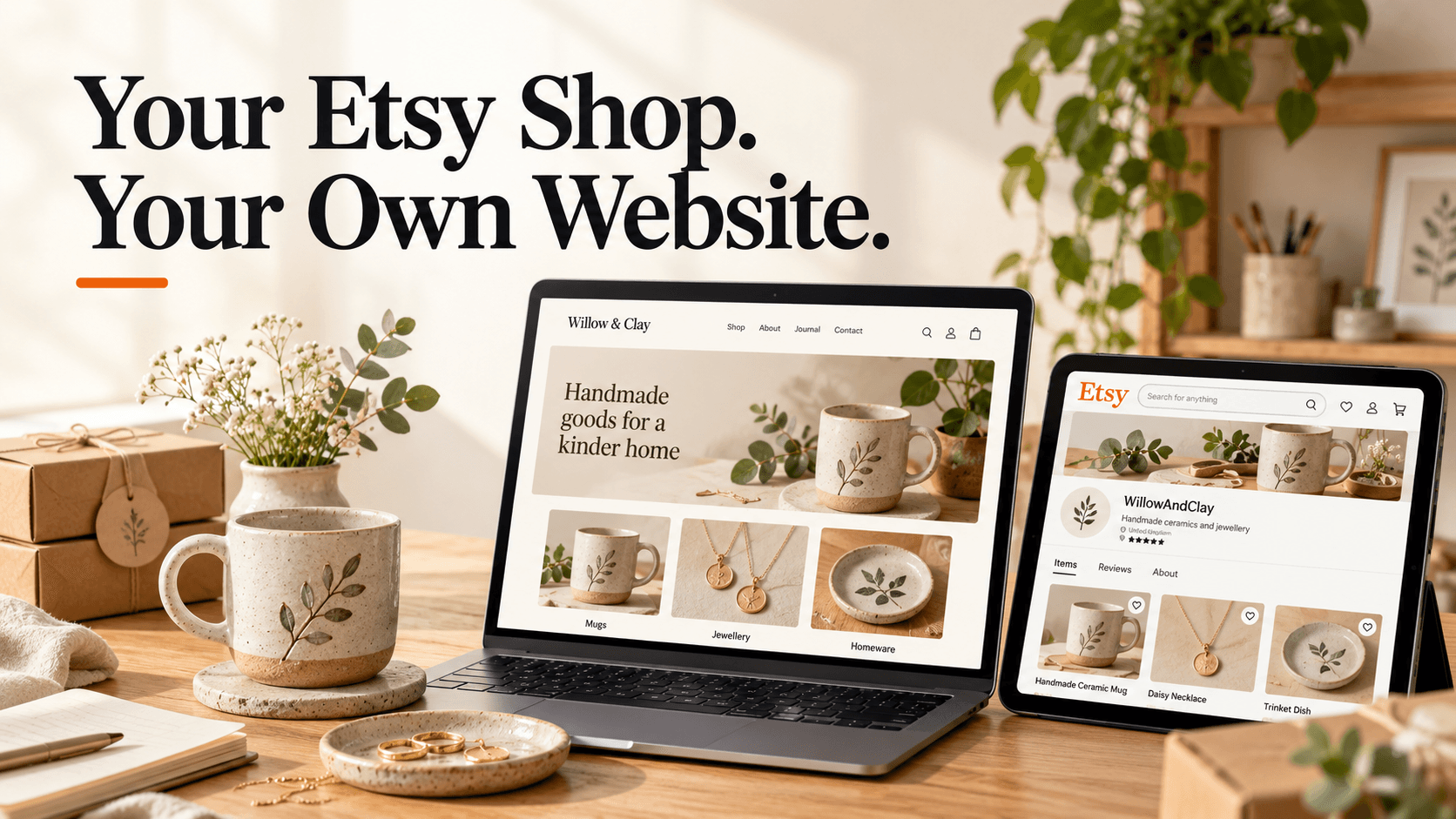
You don’t need to leave Etsy to create your own online store. Running both gives customers more ways to discover your products and reduces your reliance on a single sales channel.
In this guide, we’ll look at the benefits of having a website for your Etsy shop, the costs to consider and how to decide whether it’s the right next step.
Why Etsy Is a Good Place to Start
For independent makers and small businesses, Etsy removes many of the hurdles involved in starting an online shop.
A Straightforward Way to Start Selling
You can create listings, upload photographs and start taking orders without designing a website or arranging hosting.
There are fees to consider, including a possible shop setup fee, but it can still be an accessible way to test demand for your products. Etsy’s guide to opening an Etsy shop explains what you need to get started.
Access to an Existing Audience
People visit Etsy specifically to shop. This gives your products the opportunity to appear in front of customers who might never have heard of your business.
You still need good photography, useful descriptions and relevant listing information to compete, but you aren’t starting with a completely empty audience.
A Familiar Buying Experience
Customers who already use Etsy know how its checkout, reviews and order process work. That familiarity can make them more comfortable buying from a seller for the first time.
Less Technical Work
Etsy handles the platform’s hosting, checkout and technical maintenance. This lets you spend more time creating products, fulfilling orders and helping customers.
Why Have Your Own Website Alongside Etsy?
Etsy is useful, but it also places your business inside someone else’s marketplace. Your own ecommerce website gives you a dedicated space to develop your brand and sell directly.
Give Your Brand Its Own Space
On Etsy, your shop shares a common layout with thousands of other sellers. You can personalise parts of it, but there are limits to how you present your business.
Your own website gives you more freedom over colours, typography, page layouts and photography. You can create an experience that reflects your products and helps customers recognise your brand.
For a business selling handmade jewellery, illustrated gifts or personalised clothing, that presentation can be an important part of what makes the products appealing. A considered website design helps bring these elements together and makes your shop easier to browse.
Help Customers Remember Your Business
When someone finds you through Etsy, they may remember buying from the marketplace more clearly than they remember your shop name.
A dedicated website puts your business at the centre of the experience. Your domain name, branding, packaging and social profiles can work together to make it easier for customers to remember you and return.
This is particularly useful when you’re beginning to attract repeat buyers or people searching for your brand by name.
Sell Without Competing Listings Around You
On a marketplace, customers can quickly move between your products and similar items from other sellers.
Your website gives visitors a focused place to browse your range. You can guide them towards related products, matching collections and gift ideas without competing shops appearing alongside them.
That doesn’t guarantee a sale, but it gives you more control over the shopping experience.
Reduce Your Reliance on One Platform
If Etsy is your only sales channel, changes to its fees, search visibility or account access can have a significant effect on your business.
Having a separate website gives you another place to sell and a destination for your own marketing.
It also gives customers a consistent web address to visit, regardless of which marketplaces you use in the future.

Have More Control Over Your Selling Costs
Selling through your own website can reduce the marketplace fees attached to an order.
Etsy charges several types of fees, including listing, transaction and payment-processing fees. Advertising fees may also apply. You can find the details in Etsy’s guide to seller fees and taxes.
However, an independent shop isn’t free to run. Depending on your setup, you may need to pay for hosting, a platform subscription, payment processing, maintenance and marketing.
The useful comparison is the overall cost of generating and fulfilling a sale. Lower transaction fees only help if the other costs are manageable for your business.
Add Features That Suit Your Products
Your own online store can offer more flexibility as your business develops.
Depending on the platform and setup, you could add:
- Personalisation options.
- Product bundles and gift sets.
- Gift vouchers.
- Pre-orders.
- Wholesale enquiries.
- Customer accounts.
- Loyalty rewards.
- Guides, tutorials and blog posts.
You don’t need all of these at launch. Start with the features your customers need and expand when there’s a clear reason to do so.
What Should You Consider Before Building Your Website?
The benefits are appealing, but a website also brings responsibilities. Understanding these before you start will help you choose a sensible setup.
How Will Customers Find You?
An Etsy shop can benefit from the marketplace’s existing audience. Your own website needs a plan for attracting visitors.
That could include:
- Sharing products through your social media profiles.
- Building an email list through voluntary sign-ups.
- Creating useful content that answers customers’ questions.
- Improving product and category pages for relevant Google searches.
- Running advertising where the likely return justifies the cost.
A blog can support this, but it needs to be relevant to what you sell. For example, a jewellery business could publish gift guides, care advice or explanations of the materials it uses.
Focus on attracting people who are likely to want your products, rather than chasing traffic for its own sake.
How Much Time Can You Spend Managing It?
Your website will need product information, photographs, stock updates and order management.
If you’re selling the same products on Etsy and your website, you’ll also need a way to keep stock accurate across both channels. That might be a simple manual process for a small range or a suitable integration as sales increase.
Choose an approach that fits the time you have available.
What Will It Cost?
The cost depends on the platform, the size of your product range and the features you need.
When comparing options, consider:
- Website design and setup.
- Domain registration.
- Hosting or platform subscriptions.
- Payment processing.
- Paid themes, apps or plugins.
- Maintenance and support.
- Marketing.
Check what’s included in any quote. A low monthly price is only useful if it covers the things your shop actually needs.
You can explore our website pricing as a starting point, then discuss the requirements of your online shop with us.
What Is the Best Website Platform for Etsy Sellers?
There isn’t one platform that suits every Etsy seller. Shopify and WordPress with WooCommerce are two options worth considering.
Shopify
Shopify is designed for ecommerce and combines store management with a hosted platform.
It can suit sellers who want a central place to manage products, orders and payments without arranging their own hosting.
You can choose a theme and extend the shop with apps, although those extras may add to the monthly cost. More specific design or functionality requirements may also need development work.
Check the Shopify pricing page when comparing plans, and account for payment fees and any paid apps you expect to use.
WordPress and WooCommerce
WooCommerce adds ecommerce functionality to a WordPress website.
It can suit businesses that want flexibility over their design, content and store features. It’s also useful if you want your shop to sit alongside a larger website containing guides, service pages or other content.
You’ll need hosting and a plan for updates, backups and maintenance. These can be managed yourself or handled by a developer.

Which Should You Choose?
Start with your requirements rather than choosing a platform because it’s popular.
Think about how many products you sell, whether customers need personalisation options, how you’ll manage stock and how much ongoing support you want.
For a straightforward shop, keep the setup simple. If your products need more unusual features, discuss those before committing to a platform.
Should You Build the Website Yourself or Hire a Developer?
Building your own website can make sense if you have a small product range, straightforward requirements and time to learn the platform.
However, there’s more involved than choosing a template. You’ll need to organise your products, configure delivery and payments, check the mobile experience and test the ordering process.
Hiring a developer can help if you want support with those decisions or need a more tailored design.
Before choosing someone, ask what their service includes. Useful things to clarify are product uploads, payment setup, delivery settings, training and ongoing maintenance.
You should also understand how you’ll make everyday changes once the website is live.
When Is Your Etsy Shop Ready for Its Own Website?
You don’t need to reach a particular number of sales before launching a website. It’s more useful to look at how your business is developing.
A website may be a sensible next step if:
- You’re attracting repeat customers.
- People are searching for your business by name.
- You have an engaged social media audience.
- You want more freedom over your branding.
- Your products need features that are difficult to offer on Etsy.
- You have the budget and time to support another sales channel.
If you’re still testing your products and making occasional sales, you may get more value from improving your photographs, listings and product range first.
Etsy vs Your Own Website: Do You Have to Choose?
For many small businesses, Etsy and an independent website can work well together.
Etsy can help new customers discover your products, while your website gives your brand a dedicated home and supports the traffic you generate through your own marketing.
You can build the website gradually, starting with your most popular products and expanding as you learn what customers need.
The aim is to create another useful sales channel without taking on more work than your business can manage.
Need Help Building a Website for Your Etsy Business?
At Developer Rocket, we help independent businesses create online shops that reflect their brand and are straightforward to manage.
We can help with design, product setup, payments and ongoing support, giving you a clear route from an initial idea to a working store.
Whether you’re launching your first website or expanding an established Etsy business, get in touch to discuss your shop.