

Starting a competition website business in the UK involves more than building a website and choosing a prize. You need a legally compliant competition structure, a suitable payment provider, clear terms and conditions, enough starting capital and a realistic plan for attracting entrants.
In this guide, we explain the process step by step, based on our experience building and supporting competition websites for UK operators.
If you are looking to start your own competition/raffle website, you’re in the right place, we specialise in making custom competition sites for our clients, view more info here on our competition page or get in touch for more questions, you can also Message me on WhatsApp, click here.

How to start a competition business in the UK
- Choose your competition model and niche.
- Create a business plan and starting budget.
- Register your business.
- Understand the legal requirements.
- Arrange business banking and payment processing.
- Build a compliant competition website.
- Prepare your terms, privacy policy and free-entry instructions.
- Choose and price your first competitions.
- Test the complete purchase and draw process.
- Launch and begin marketing.
What Is a Competition Website Business?
Get in touch here for more info about how to make a competition/raffle website today.
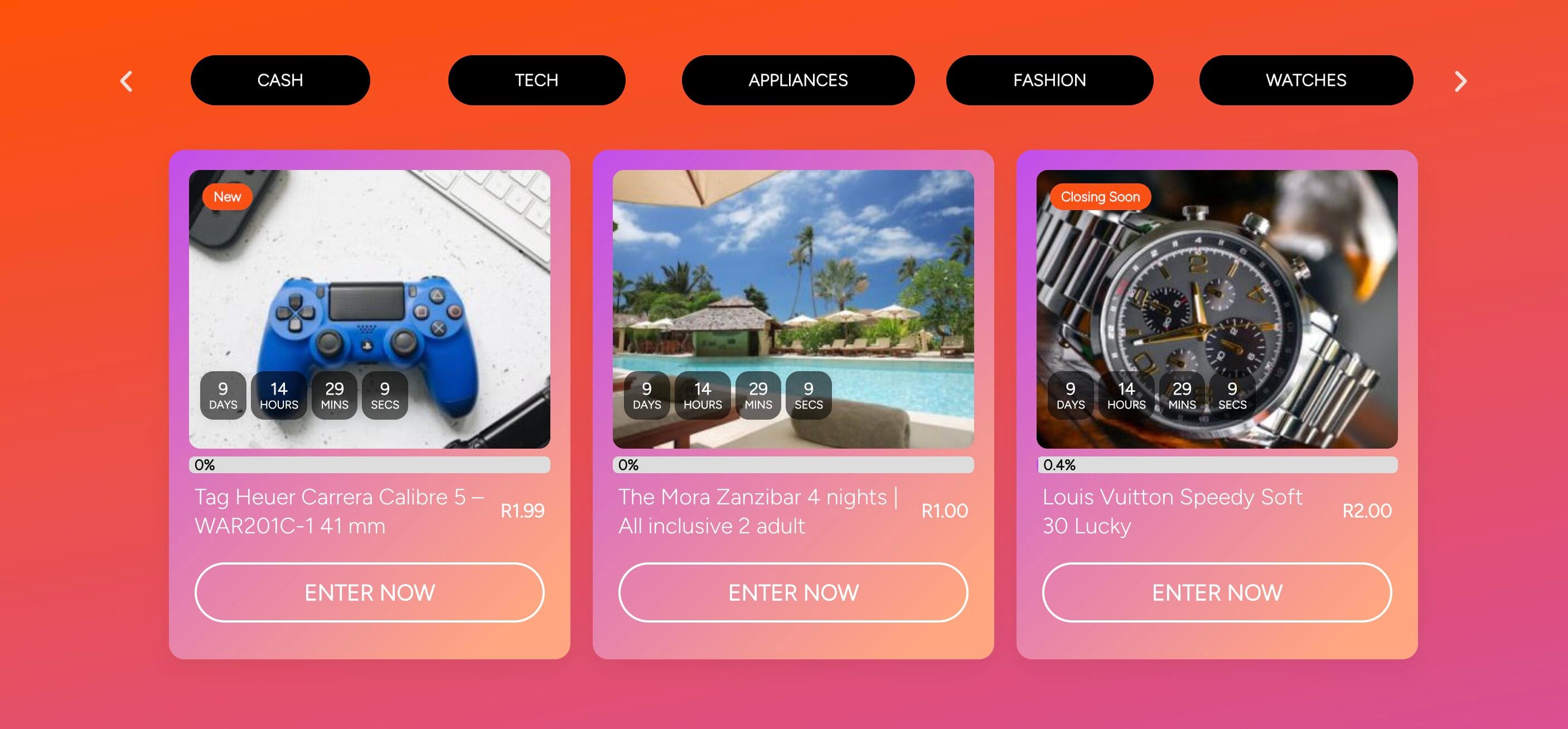
Are you looking to start a competition or raffle website, or maybe you have a business already and want to expand it. A competition website allows you to sell tickets online and give away prizes. This blog post talks about how you can start a successful competition website.
- Start selling tickets and making money in a few days
- Set up competitions and run the website yourself
- We create a stunning, unique website just for you
- Sell tickets for any kind of competition, including free giveaways, cash, cars, holidays, and anything else
- Instant win functionality is available
- User wallets, sign up bonuses, instant wins goes to wallets
- All our sites follow the law and regulations
Some of our successful competition/raffle website builds
When creating competition websites we always take the clients needs on board, we create websites specifically form them and give full tutorials on how to use the site. We also offer full support.
The Vintage Watch Draw
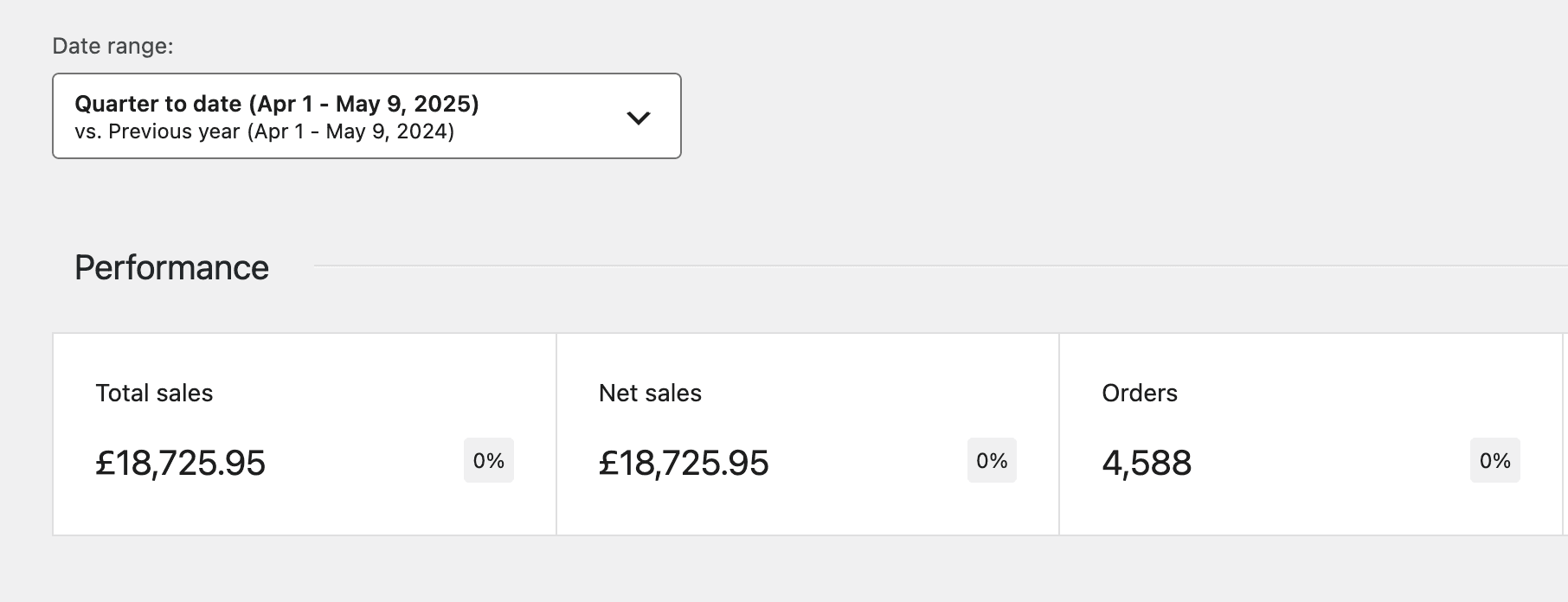
From £0 to £40k+ month in sales within 3 months. Using Instagram and Facebook marketing

Bonnie Competitions
From £0 to £60k+ a month in sales after 6 months. Using Facebook communities and marketing

We can create a fully functioning competition website with all the features you need, get in touch today.

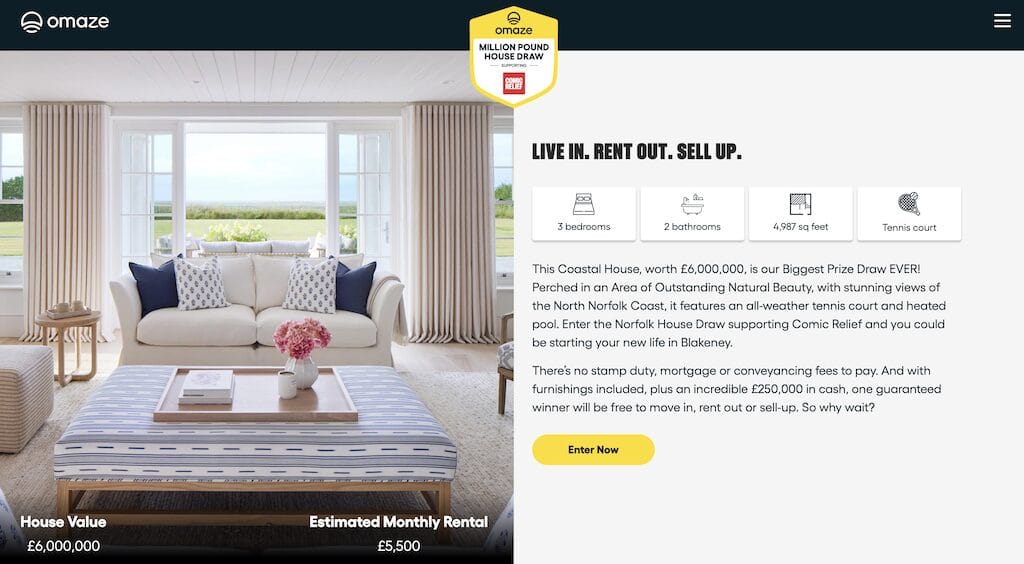
Raffle and competition websites are becoming more popular each year. There are all kinds available with various pricing, from winning millions to luxury houses to custom camper vans. Some charge as little as 1p to enter and others charge £20+ for larger things with better odds like vintage watches. One of the biggest new players in the online raffle/competition industry is Omaze, which offers players a chance to win a luxury house somewhere in the UK or Europe. Ticket prices start from £10, but you can even subscribe every month.
We can help you create your own competition/raffle website, where you can sell tickets, generate ticket numbers, give away prizes, and have the system automatically send emails to winners, giveaway instant wins, website credit and more.
Get in touch today to start your own successful competition site like we have done for many others.
How to Start a Competition Business: Step-by-Step
1. Choose a niche and target customer
Before diving into the creation of a competition website, it’s essential to define your goals and understand the process from start to finish. This step forms the foundation of your website’s success. Here’s what you need to consider:
Define Your Goals
Ask yourself:
- What is the purpose of your competition website?
Is this a supporting website to another business of yours or are you simply trying to generate more income? If so what is your monthly goals? - Who is your target audience?
Consider who you want to attract to your site. Are they tech-savvy young adults, busy parents, or niche hobbyists? Tailoring your website to their preferences will enhance its appeal. A niche always works better as you can advertise to them specifically rather than everyone. - What type of competitions will you run?
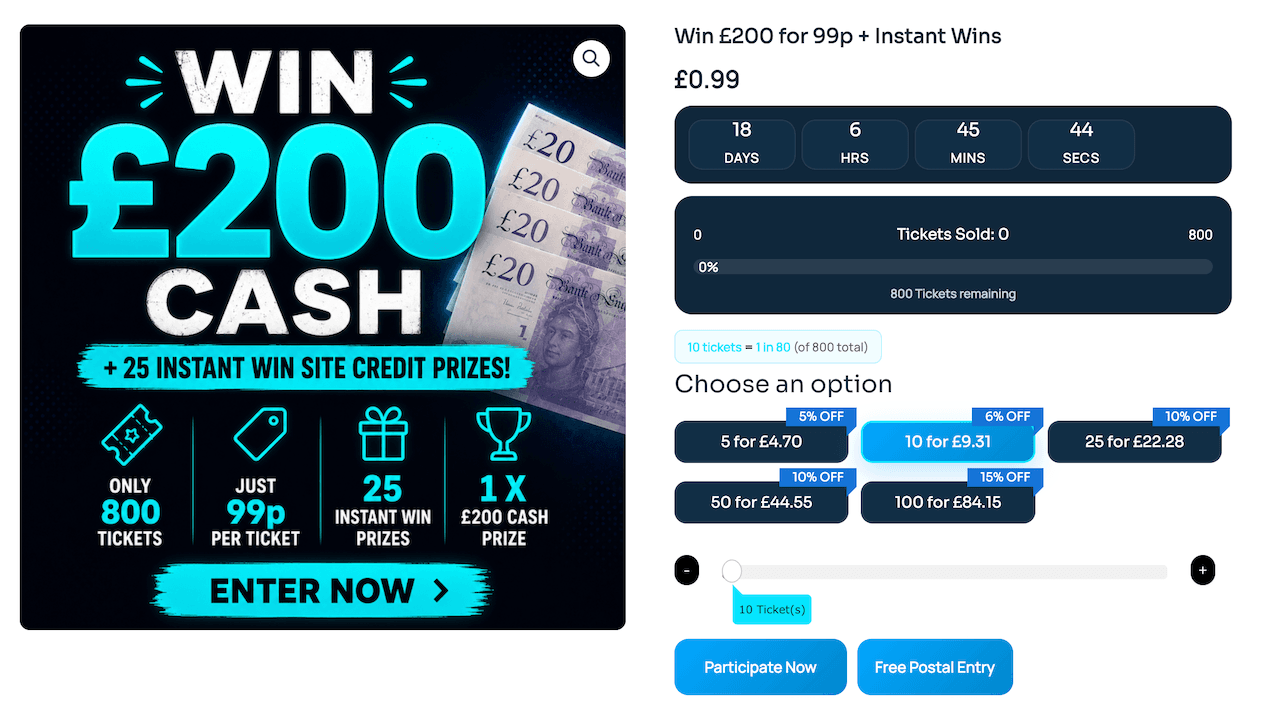
Will you be giving our money, tech or other things? Will you be doing instant wins? Do some research into what you want to do first, find some competitors that do something similar to you. - How are you going to maximise ticket sales?
Will you be creating urgency, how often are you going to be doing competitions? what is the durations? Will you be offering bulk discounts? Some choose to display the odds of winning.
Understand the Requirements of your competition site
Running a competition website involves more than simply putting up a page and waiting for participants to join. You need to consider:
- Legal and Compliance Issues
Check the legal requirements in you country, we talk about this further on in the blog post but you need to consider this before you even start so read on to find out more. Are Competition Websites Legal in the UK? - Costs and Budget
Factor in website development costs, hosting, marketing, and prize acquisition. If you’re offering high-value prizes, ensure the potential return on investment is worth it. - Technical Features
What functionality does your website need? Some common requirements include:
- Entry forms
- Number generation
- Instant wins
- Payment gateways (if participants need to buy tickets or make a purchase to enter)
- Countdown timers
- Automated winner selection
- Social sharing integrations
We handle all of this when it comes to website developement.
- Prizes and Incentives
The prize is the main attraction for your audience. Choose something desirable and relevant to your target demographic. Whether it’s cash, tech bundles, or experience packages, your prize needs to excite your audience and encourage participation. - Marketing and Promotion
Plan how you’ll drive traffic to your website. Social media, email campaigns, influencer collaborations, and paid ads can all play a role in promoting your competition.
By setting clear goals and understanding what’s involved, you’ll be better prepared to build a competition website that achieves your objectives and engages your audience. With this foundation in place, you’re ready to move on to planning the structure and design of your site.
2. Create a realistic business plan
Before investing in a website, prizes and advertising, create a realistic business plan for your competition business. You do not need a complicated document, but you should understand your expected costs, how many tickets you need to sell and what will happen if a competition performs poorly.
Start by deciding how much money you can comfortably invest. Your initial budget may need to cover:
- Website design and development
- Your first prizes
- Business registration and legal documents
- Hosting, maintenance and security
- Payment processing fees
- Branding and marketing
- Insurance and professional advice
- A contingency fund for unexpected costs
Next, calculate the break-even point for each competition. For example, if a prize and its associated costs total £5,000, selling 5,000 tickets for £1 will not generate a profit. You must also account for payment fees, advertising, free entries, discounts, instant-win prizes and other running costs.
Consider whether you can still provide the advertised prize if ticket sales are lower than expected. Offering guaranteed draws can build customer trust, but it also means you need enough working capital to honour every prize regardless of sales.
Your business plan should also identify your target audience, the types of prizes they are likely to enter for and how you will reach them. Avoid relying entirely on paid social media advertising. Email marketing, organic social content, referrals, repeat customers and partnerships can all help reduce your cost per sale.

Set conservative targets for your first few competitions and review the results after every draw. Track ticket revenue, advertising spend, processing fees, customer acquisition cost and repeat purchases. This will help you understand which prizes are profitable and where your budget is being wasted.
A realistic plan will not guarantee success, but it can prevent you from committing too much money before you know whether there is genuine demand for your competitions.
3. Register the business
Before launching, decide whether to operate as a sole trader or limited company. Many competition businesses choose to register a limited company because it separates the business from their personal finances and can appear more credible to banks, payment providers and customers. We recommend operating as a limited company as many business bank accounts require you to do this.
You should also open a dedicated business bank account, register for any relevant taxes and keep accurate records of your income and expenses. Consider speaking to an accountant if you are unsure which structure is most suitable.
4. Open a Business Bank Account
Competition and prize-draw businesses are often considered high risk, so many mainstream banks may decline your application or restrict the account. Never hide your business model or use a personal account, as this could result in your account being closed.
Providers worth considering include Zempler Bank, Card One Money and Xace. Approval is not guaranteed, so explain exactly how your competitions operate and be prepared to provide your website, terms and conditions, free-entry details and company documents.
Check that the provider accepts competition businesses before applying, as banking policies can change.
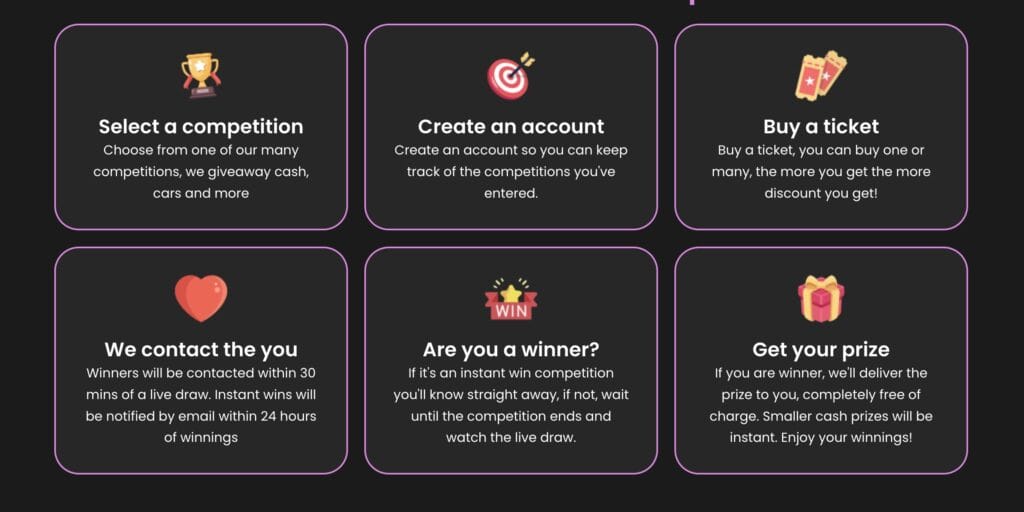
5. Find a suitable payment provider
Once you’ve established your goals, the next step is to create your competition website and integrate a secure payment gateway. Here’s a guide to ensure your website is functional, user-friendly, and capable of handling transactions seamlessly.
Competition and prize-draw websites are often classified as high risk by payment providers, even when they are structured legally and do not require a gambling licence. Standard providers such as Stripe or PayPal may therefore decline, restrict or close accounts operating in this sector.
You will usually need a specialist payment provider that understands competition businesses. Options include:
Acceptance is never guaranteed. The provider will assess your business, website and competition structure before approving your account.
 Prepare for the Application
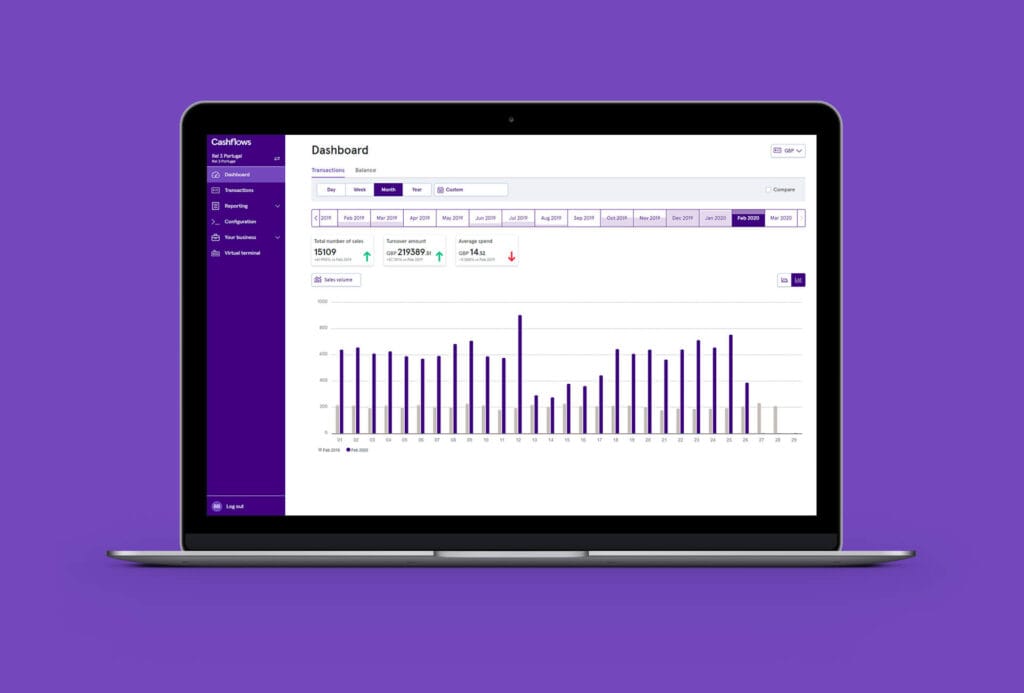
Payment providers may ask to see:
- Your live or nearly completed website
- Company and director information
- Terms and conditions
- Privacy and refund policies
- Details of your paid and free entry routes
- Examples of planned competitions and prizes
- Evidence of your business bank account
- Expected transaction values and monthly turnover
Be completely transparent about how your competitions operate. Hiding the nature of the business could result in payments being stopped or funds being held later.
Consider Fees and Payment Methods
Specialist payment providers may charge higher transaction fees or hold a rolling reserve because of the perceived risk. Include these costs when pricing your tickets and calculating the break-even point for each competition.
Check whether the provider supports the payment methods your customers expect, including debit and credit cards, Apple Pay and Google Pay.
Integrate and Test the Gateway
Your payment gateway must integrate correctly with your website, automatically confirm successful payments and allocate the correct ticket numbers. Before launching, test successful payments, failed payments, refunds, order emails and mobile checkout.
Payment processing should be arranged early in the project. Do not assume that approval is guaranteed simply because your website has already been built.
6. Build the competition website
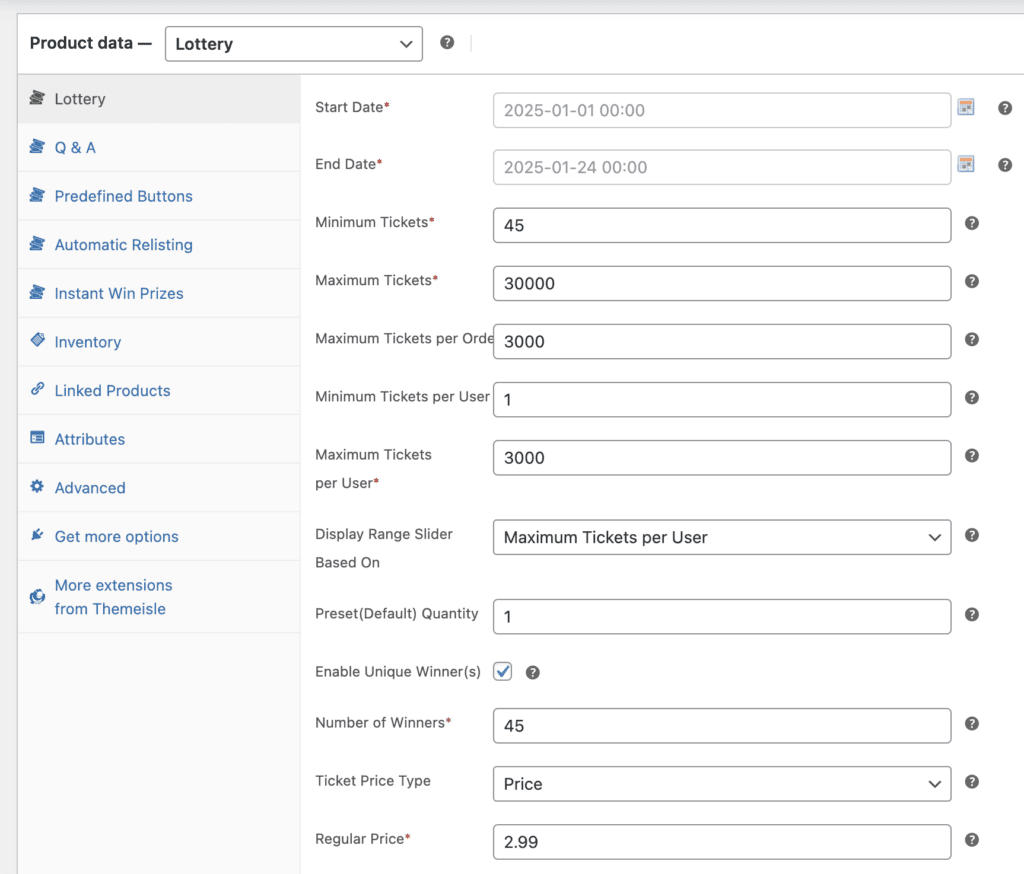
Your website is at the centre of the business. It needs to look professional, make entering a competition simple and reliably manage payments, ticket numbers, customer accounts and draws. It should not take 5 or 6 clicks to reach the buying a ticket stage, it should be 2 at most.
At Developer Rocket, we design and build complete competition websites for new and established UK operators. Each project begins with a bespoke design in Figma, allowing you to review the appearance and customer journey before development begins.
Once the design is approved, we build the website using WordPress and WooCommerce, together with specialist competition functionality and carefully selected plugins. Depending on your requirements, your website can include:
- Standard and instant-win competitions
- Automatic ticket-number allocation
- Manual or randomly selected ticket numbers
- Quantity discounts and ticket bundles
- Free-ticket promotions
- Skill-based entry questions
- Free postal entry information
- Live countdowns and ticket availability
- Customer accounts and order history
- Automated order and entry emails
- Winner pages and previous draw results
- Site credit and referral rewards
- Secure payment-gateway integration
- Mobile-friendly competition pages
- Marketing and analytics integrations
A Completely Custom Competition Website
Some hosted competition platforms and website builders, such as Rafflex, provide a ready-made system with a limited selection of layouts and features. This may suit operators looking for a quick, standardised setup, but it can restrict how much control you have over the design, functionality and future development of the website.
Developer Rocket provides a completely custom solution. Your website is built around your brand, competitions and business model rather than forcing your business into an existing template.
This gives you:
- Complete control over the design and branding
- The freedom to request custom features
- Greater control over your website content and SEO
- The ability to add new functionality as the business grows
- No requirement to make your website look like every other platform
- Direct support from the team that designed and built it
If you have seen a feature elsewhere or have an original idea of your own, we can usually find a way to build it. This flexibility is particularly valuable as your competition business grows and you begin introducing different prize formats, promotions and customer-retention features. Get in touch with the team today to find out more info.
Designed to Build Trust and Increase Entries
A successful competition website must do more than process payments. Customers need to feel confident that the business is genuine, the prizes are real and every draw will be conducted fairly.
We design the customer journey around these concerns, using clear competition information, visible ticket availability, previous winners, draw details, secure checkout pages and prominent access to your terms and free-entry route.
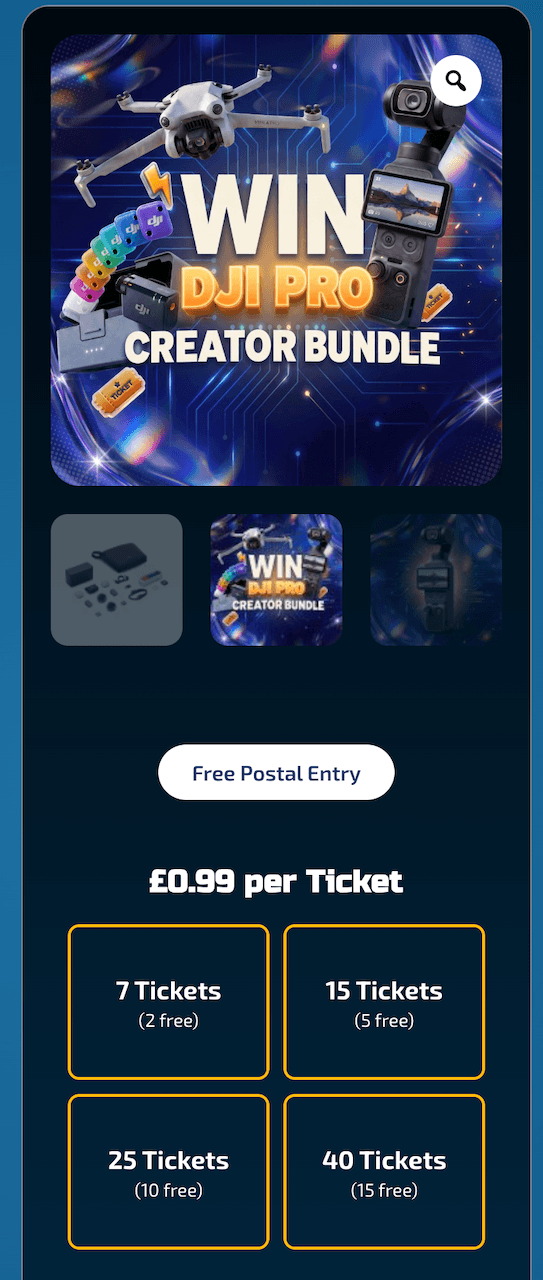
The website is also designed for mobile devices, where a large proportion of customers will browse competitions and purchase entries. Pages should load quickly, ticket selection should be easy and customers should be able to complete checkout without unnecessary steps.
Built for You to Manage
Once the website is live, you will be able to create competitions, update prizes, view orders, manage customers and publish winners through an easy-to-use administration area. We provide guidance on using the system and can continue supporting, maintaining and improving the website after launch.
Building a competition website involves several moving parts, from ticket allocation and payment processing to compliance information and automated emails. Working with a developer who understands this industry can help you avoid expensive technical problems and create a platform that is ready to grow with your business.
7. Prepare your legal pages
Before accepting entries, your website must clearly explain how your competitions operate and what customers are agreeing to. Copying another competition website’s policies is risky because its business model, entry process and prize rules may be different from yours.
The main legal pages you are likely to need include:
- Competition terms and conditions
- Privacy policy
- Cookie policy
- Free postal entry instructions
- Responsible play policy
- Refund and cancellation policy
- Complaints procedure
- Website terms of use
Legal Requirements for Competition Websites in the UK
Your competition terms should cover important information such as who can enter, age and location restrictions, opening and closing dates, ticket allocation, how winners are selected and contacted, how prizes are delivered and what happens if a winner cannot be reached. Are Competition Websites Legal in the UK?
Do I need a gambling license to run a competition website?
No you don’t according to the official gambling commision website you do not need a gambling license. You can run a competition website as long as they are being ran in a way that meets the requirements of the Gambling Act 2005 (opens in new tab). Please read the official requirements here.
Free Postal Entry Route
If you offer a free postal entry route, the instructions must be clear, prominent and genuinely accessible. Customers should be told exactly how to enter, what information to include and when their entry must arrive. Significant conditions should also be displayed on the relevant competition page rather than hidden entirely within your full terms.

Why Compliance Matters with Competition sites
Launching a competition website correctly from the start can save significant problems later. Many websites fail because they overlook compliance, payment processing, or legal structure.
A properly built competition platform should combine:
- Strong legal foundations
- Transparent competition processes
- Secure payments
- Mobile-friendly design
- Marketing systems
- Scalable infrastructure
This creates a trustworthy business that is easier to advertise, scale, and grow long term.
Your privacy and cookie policies should explain what customer information you collect, why you collect it, how long it is retained and whether it is shared with services such as payment providers and marketing platforms.
Legal documents should be written specifically for your business and reviewed by a suitably qualified legal professional. Developer Rocket can add and correctly display these pages throughout your website, but website development should not be treated as a substitute for independent legal advice.
Useful official guidance is available from the Gambling Commission, Advertising Standards Authority and Information Commissioner’s Office.
If you are planning to start a raffle or competition business in the UK, understanding the legal side of the industry is essential. Many new competition website owners mistakenly believe they can simply launch a website and begin selling tickets, but UK competition businesses must follow strict rules to avoid being classed as an illegal lottery.
The good news is that prize competition websites can operate legally in the UK when structured correctly.
8. Select and Price Your First Prize
Your first prize should appeal directly to your target audience without putting too much of your starting budget at risk. Popular options include cash, technology, gaming products, watches and cars, but a smaller, highly desirable prize can be a safer starting point than an expensive headline giveaway.
When running your competition site you should look at competitors and see what they are doing and what works for them. Check them to see what competitions do better than others.
Research similar competitions to understand typical ticket prices and sales volumes. When setting your price, account for:
- The cost of the prize
- Website and payment-processing fees
- Advertising costs
- Instant-win prizes and site credit
- Discounts and free-ticket offers
- Your desired profit margin
- The possibility of unsold tickets
For example, selling 2,000 tickets at £1 does not guarantee £2,000 in revenue once discounts, free entries and failed payments are considered. Calculate your break-even point using a conservative sales estimate rather than assuming every ticket will sell.

Customers should be able to see the prize, ticket price, maximum number of entries, closing date and any cash alternative before entering. Most importantly, only advertise a prize you can provide even if sales are lower than expected.
9. Test Everything Before Launch
Before promoting your first competition, test the complete customer journey on desktop and mobile. Ask several people who are unfamiliar with the website to place test orders, as they may identify problems you have overlooked.
Check that:
- Registration and login work correctly
- Ticket quantities and prices are accurate
- Discounts and instant wins are applied properly
- Skill questions and free-entry information are clear
- Payments are processed securely
- Ticket numbers are allocated only once
- Confirmation emails and receipts are delivered
- Customer accounts display the correct entries
- Closing dates and countdown timers are accurate
- Winners can be selected and published correctly
- Legal pages are visible and easy to access
- Analytics and conversion tracking work correctly
You should also test failed payments, refunds, cancelled orders and high ticket quantities. It is much better to discover a problem during testing than after customers have paid.
Developer Rocket thoroughly tests every competition website before launch and can continue monitoring, maintaining and supporting it once it is live.
10. Market Your Competitions
Even the best competition website will struggle without a clear marketing plan. Ideally, you should begin building an audience before your first competition launches rather than relying on customers to discover the website themselves.
Useful marketing channels include:
- Facebook, Instagram and TikTok
- Paid social media advertising
- Email and SMS marketing
- Influencer partnerships
- Referral and loyalty rewards
- Search engine optimisation
- Giveaways and launch promotions
- Customer reviews and winner announcements
Your content should do more than repeatedly ask people to buy tickets. Show the prizes, explain how your draws work, introduce the people behind the business and share genuine winner reactions. This helps customers recognise your brand and builds confidence that your competitions are legitimate.
Advertising on Facebook and Instagram
To advertise paid-entry competitions on Facebook or Instagram, you will generally need prior approval from Meta under its Real Money Gaming advertising policy. This is commonly referred to as an RMG licence or RMG approval.
The application requires information about your business, website and competition model. Your adverts must also comply with Meta’s restrictions, including its rules around eligible locations and age targeting.
Developer Rocket can help you prepare and submit your RMG application. If you need approval to advertise your competition business on Facebook and Instagram, get in touch with our team.
Every advertisement should clearly communicate important conditions, including the prize, closing date, eligibility restrictions and how customers can enter. Avoid misleading countdowns, exaggerated odds or claims that suggest someone is more likely to win than they really are.
Other ways to advertise your competition site
Encourage visitors to join your mailing list so you can promote future competitions without paying to reach the same customer again. Discount codes, site credit, ticket bundles and referral rewards can also encourage repeat purchases, but these offers should always be clearly explained.
Track where your sales originate. Monitor advertising spend, conversion rates, cost per customer and repeat purchases instead of judging a campaign by likes or website visits alone. Start with a manageable budget, test different prizes and adverts, and increase your spending only when the figures show that a campaign is profitable.
We find that SMS advertising is a very effective way to convert existing customers into more sales.
Prize Competitions vs Lotteries
In the UK, there is an important difference between a lottery, a free draw, and a prize competition.
A traditional lottery usually:
- Requires payment to enter
- Relies entirely on chance
- Requires a licence from the UK Gambling Commission
Most online competition websites avoid being classified as lotteries by using one of the following legal exemptions:
Skill-Based Prize Competitions
This is section has been updated on 10th of August 2026.
Recently we have heard from our contact at Cashflows that you do not need a skilled based question on your competition site, you only need free postal entry. But if you want a skill question you can still have it on your website. This is not legal advice.
Gambling Act 2005
Most UK competition websites operate under rules outlined within the UK Gambling Commission and the Gambling Act 2005.
Understanding these regulations is crucial because failing to structure your competitions correctly could result in:
- Payment gateway restrictions
- Advertising account bans
- Legal complaints
- Regulatory action
You can read the official guidance here:
UK Gambling Commission Prize Competition Guidance

Payment Gateway Restrictions
Not all payment providers are comfortable working with competition websites. Some platforms may restrict accounts if your competitions appear too similar to gambling or lotteries.
Competition businesses commonly use:
- Stripe
- PayPal
- Klarna
- Alternative high-risk payment providers
To reduce the risk of payment issues, your website should clearly display:
- Terms & Conditions
- Free entry details
- Competition rules
- Draw process information
- Skill question details (if applicable)
A professionally structured website can significantly improve payment provider approval rates.

How Much Does It Cost to Start a Competition Website?
Developer Rocket’s custom competition websites typically cost between £2,500 and £4,500, depending on the design, functionality and level of customisation required.
A standard custom competition website starts from £2,500 and can include:
- Bespoke website design in Figma
- WordPress and WooCommerce development
- Standard competition functionality
- Automatic ticket-number allocation
- Quantity discounts and ticket bundles
- Customer accounts and automated emails
- Specialist payment-gateway integration
- Mobile optimisation
- Legal and free-entry page setup
- Training and launch support
More advanced builds can cost up to £4,500 and may include instant wins, site credit, referral rewards, custom ticket selectors, advanced promotional features, additional payment options and other bespoke functionality.
Unlike hosted competition platforms, your website is designed specifically for your business. You are not restricted to a fixed template or a limited list of features, and the website can be adapted as your business grows.
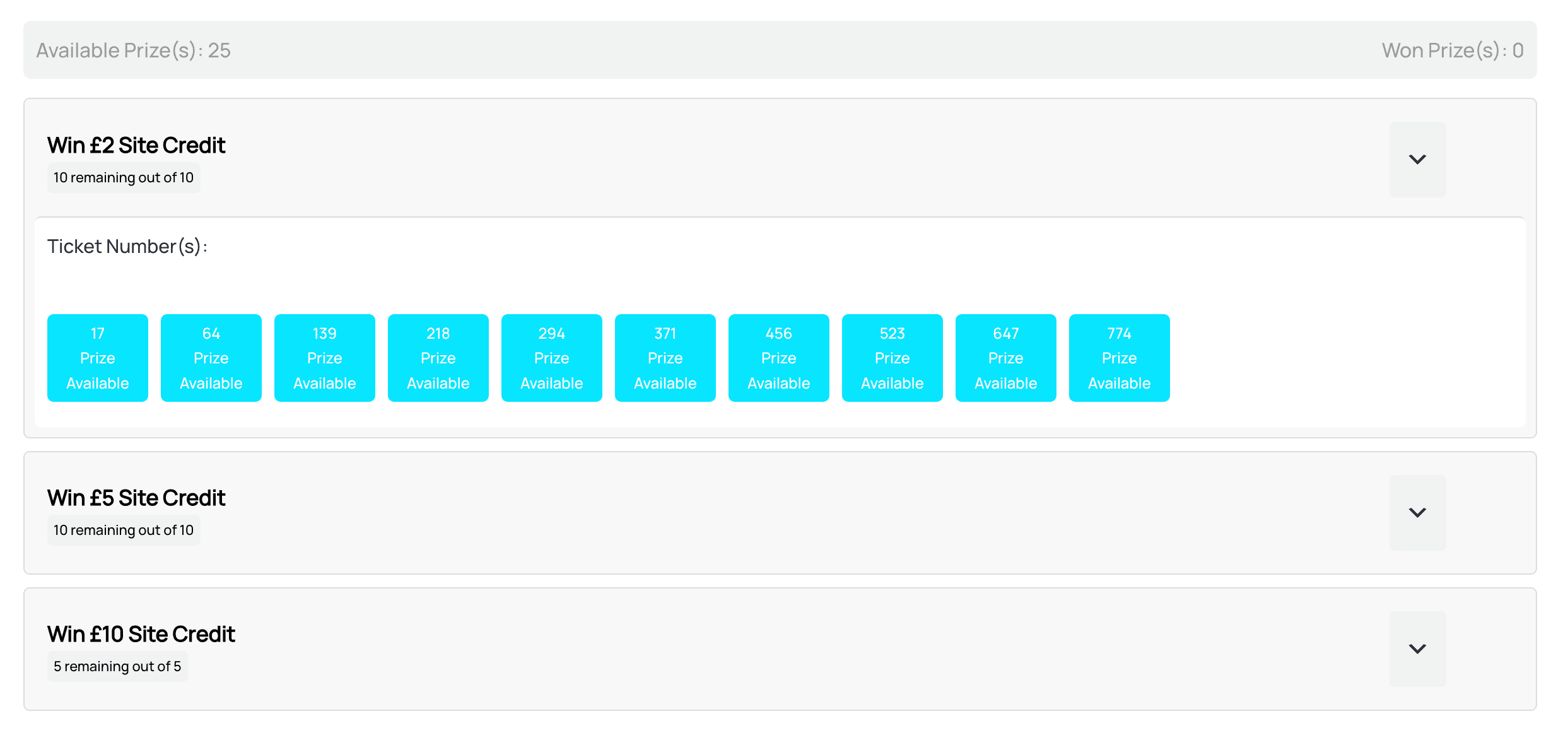
A cheaper ready-made platform may appear attractive initially, but monthly subscriptions, transaction charges and paid upgrades can quickly increase the long-term cost. You may also have less control over the website’s design, customer journey and functionality.
You will also need to budget separately for prizes, payment-processing fees, advertising, business banking, legal advice, hosting and ongoing maintenance. We explain all website costs clearly before work begins, so you know exactly what is included.
Contact Developer Rocket to discuss your plans and receive a tailored, no-obligation quote for your competition website.
Get in touch below for a quote from us, this form goes straight to our inbox so we’ll reply when we can, thanks!
How Do Competition Websites Make Money?
Competition websites make money by selling entries for more than the total cost of running the competition. The difference between the entry revenue and the cost of the prize, advertising, payment processing and other expenses is the potential profit.
However, the maximum number of tickets multiplied by the ticket price is not the same as profit. You must account for unsold tickets, discounts, free entries and operating costs.
Example 1: A Successful Cash Competition
Imagine you offer a £1,000 cash prize with 5,000 tickets available at £1 each.
| Item | Amount |
|---|---|
| Maximum possible ticket revenue | £5,000 |
| Actual revenue after unsold tickets and promotions | £3,850 |
| Cash prize | -£1,000 |
| Advertising | -£1,000 |
| Payment-gateway fees | -£154 |
| Instant wins and site credit | -£300 |
| Allocated website and operating costs | -£150 |
| Estimated profit before tax | £1,246 |
This example assumes approximately 85% of the tickets are sold, with the final revenue reduced by free-ticket promotions and discounts. Payment fees have been estimated at 4%, although your actual rate will depend on your provider and transaction values.
Example 2: A Competition That Performs Poorly
Now imagine you offer a £700 technology prize with 2,000 tickets available at 99p each.
| Item | Amount |
|---|---|
| Maximum possible ticket revenue | £1,980 |
| Actual revenue after low sales and promotions | £950 |
| Prize cost | -£700 |
| Advertising | -£450 |
| Payment-gateway fees | -£38 |
| Instant wins and site credit | -£100 |
| Allocated website and operating costs | -£100 |
| Estimated loss before tax | -£438 |
Although the competition could theoretically generate £1,980, low ticket sales mean it makes a loss. This is why your business plan should not assume every competition will sell out.
Example 3: An Established Website With Repeat Customers
An established competition website may be less dependent on paid advertising because it can promote new draws to existing customers through email, SMS and organic social media.
| Item | Amount |
|---|---|
| Ticket revenue | £6,000 |
| Prize cost | -£2,000 |
| Advertising | -£800 |
| Payment-gateway fees | -£240 |
| Instant wins and promotions | -£500 |
| Website and operating costs | -£200 |
| Estimated profit before tax | £2,260 |
This is where repeat customers become particularly valuable. If someone returns through an email rather than a paid advert, the cost of generating that sale can be considerably lower.
Calculating Your Potential Profit
A simple calculation is:
Ticket revenue − prize cost − advertising − payment fees − promotional prizes − operating costs = profit before tax
Competition websites can be profitable, but there is no guarantee that every draw will make money. Start with manageable prizes, track every cost and use conservative sales estimates. You must also have enough available funds to provide the advertised prize even when ticket sales are lower than expected.
These figures are illustrative and exclude tax. Actual payment fees, advertising costs and sales results will vary between businesses.
Competition Business FAQs
How do I start a competition business in the UK?
Begin by choosing your niche, creating a realistic business plan and registering the business. You will then need a suitable business bank account, specialist payment provider, legally reviewed terms and a reliable competition website. Once everything has been tested, you can launch your first prize and begin marketing. Developer Rocket can help you every step of the way.
Do I need a licence to run a competition website?
A properly structured free draw or genuine prize competition does not normally require a Gambling Commission licence. However, it must meet the requirements of the Gambling Act 2005. If it does not, it could be considered an illegal lottery. Obtain independent legal advice before launching.
What is the difference between a raffle and a prize competition?
A raffle or lottery generally involves people paying to enter, with the winner chosen entirely by chance. Commercial lotteries cannot normally be run for private profit without falling foul of gambling laws.
A prize competition uses sufficient skill, knowledge or judgement, while a free draw provides a genuine free entry route alongside any paid option. The distinction is important, even though the terms are often used interchangeably.
Does a competition website need a free postal entry route?
It depends on how the promotion is structured. Many paid-entry prize-draw websites provide a genuine free postal entry route so the draw is not treated as a lottery. The route must be clearly explained, reasonably accessible and treated fairly alongside paid entries.
How much does a competition website cost?
Developer Rocket’s bespoke competition websites typically cost between £2,500 and £4,500. A standard custom website starts from £2,500, while more advanced builds with instant wins, referrals, site credit and bespoke features can cost up to £4,500.
You should also budget for prizes, advertising, payment processing, business banking, hosting, maintenance and professional legal advice.
Can I use Stripe or PayPal?
Competition businesses are frequently classified as high risk, so standard providers may decline or restrict the account. You will normally need a specialist payment provider that understands prize competitions and approves the business before it begins accepting payments.
Which payment gateways accept competition websites?
Providers that work with the sector include Cashflows and Nochex, although every application is assessed individually. Approval will depend on factors such as your website, business structure, terms, free-entry route and expected transaction volumes. Payment Gateway for Competition Sites UK: 6 Providers That Actually Work (2026)
Can I advertise my competitions on Facebook and Instagram?
To advertise paid-entry competitions on Facebook and Instagram, you will generally need approval from Meta under its Real Money Gaming policy. This is commonly called RMG approval or an RMG licence. What Is an RMG Licence and Why Do Competition Websites Need One?
Developer Rocket can help you prepare and submit your application to Meta.
How do competition websites make money?
Competition websites generate revenue by selling entries. Profit is the amount left after deducting the prize, advertising, payment fees, instant wins, discounts and operating costs. A competition does not need to sell out to make money, but its break-even point should be calculated before launch.
What happens if all the tickets do not sell?
This must be addressed clearly in your terms. Many reputable operators guarantee that the draw will still take place and the advertised prize will still be awarded. If you adopt this approach, you must have enough working capital to provide the prize even when ticket sales are lower than expected.
Can I build a competition website using WordPress?
Yes. Developer Rocket builds bespoke competition websites using WordPress, WooCommerce and specialist competition functionality. This provides far more control over the design, features and future development than many closed, subscription-based platforms.
How long does it take to build a competition website?
The timeframe depends on the design, required features, content and how quickly feedback is provided. Payment-provider approval can also affect the launch date, so it should be started early. Developer Rocket will provide an estimated schedule before beginning the project.
Do I need legal terms and conditions?
Yes. Your terms should explain eligibility, entry routes, ticket allocation, closing dates, winner selection, prize delivery and what happens if a winner cannot be contacted. They should be written for your particular business and reviewed by a suitably qualified legal professional.
Is starting a competition business guaranteed to be profitable?
No. Profit depends on your prizes, pricing, advertising performance, operating costs and ability to build a returning customer base. Begin with affordable prizes, use conservative forecasts and never rely on every available ticket being sold.
Create a raffle website or competition website
Creating a raffle or competition website can be a rewarding way to engage your audience, raise funds, or increase brand awareness. By following these steps and leveraging the right tools and strategies, you can create a successful event that captures the attention of your target audience and drives results for your organisation or business.
If you are looking for help in developing your competition or raffle website, get in touch with us at Developer Rocket today!